
Anilao Diving from Singapore: Muck, Macro & Blackwater
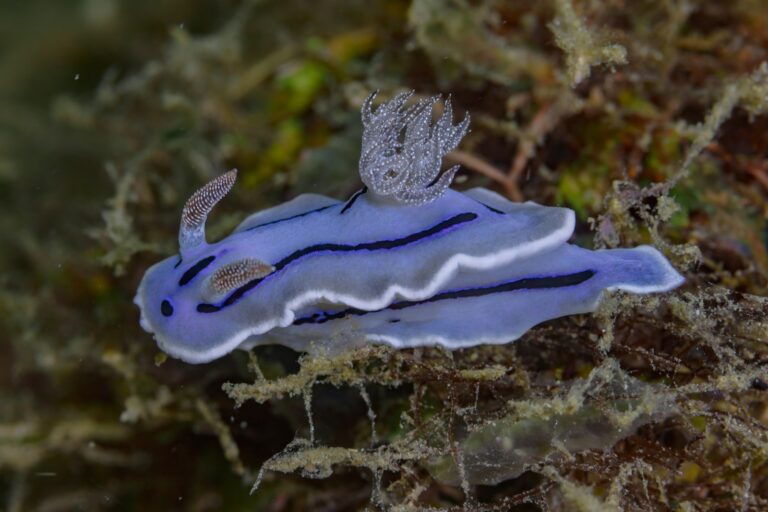
Anilao is a macro and muck diving destination in Batangas, on the Philippine side of the Verde Island Passage, about a four-hour flight plus a road transfer from Singapore. It is the place you go to photograph the small stuff: 600-plus species of nudibranch, blue-ringed octopus, frogfish, and blackwater critters that barely have names yet. This guide covers how to get there, the dive sites worth knowing, when to go, whether it suits your experience level, and what to pack.
Getting there from Singapore
The flight is the easy part. Singapore to Manila runs about 3 hours 55 minutes nonstop, with multiple daily direct services on Singapore Airlines, Philippine Airlines, Cebu Pacific, and Scoot. The part people underestimate is the road transfer from Manila to Anilao.
| Leg | Time | Notes |
|---|---|---|
| SIN to Manila (flight) | ~3h 55m | Many daily direct flights |
| Manila to Anilao (road) | 2.5 to 3 hours | Via SLEX and the STAR Tollway; as quick as ~2.5h with no traffic |
| Friday / holiday traffic | 3 to 4.5 hours | The real planning number: budget 3h+ and pre-book a resort transfer |
Do not plan around a two-hour drive, that number gets quoted a lot and it is optimistic. Friday rush hour, evenings, or the day before a public holiday can push the transfer to four hours or more. Departing Manila before 7am or after 10am dodges the worst of the morning peak. Most Anilao dive resorts arrange a private car or van transfer for guests, which is the sensible way to do it after a flight; there is no passenger ferry, Anilao is reached overland through Batangas.
Why divers go: the muck capital
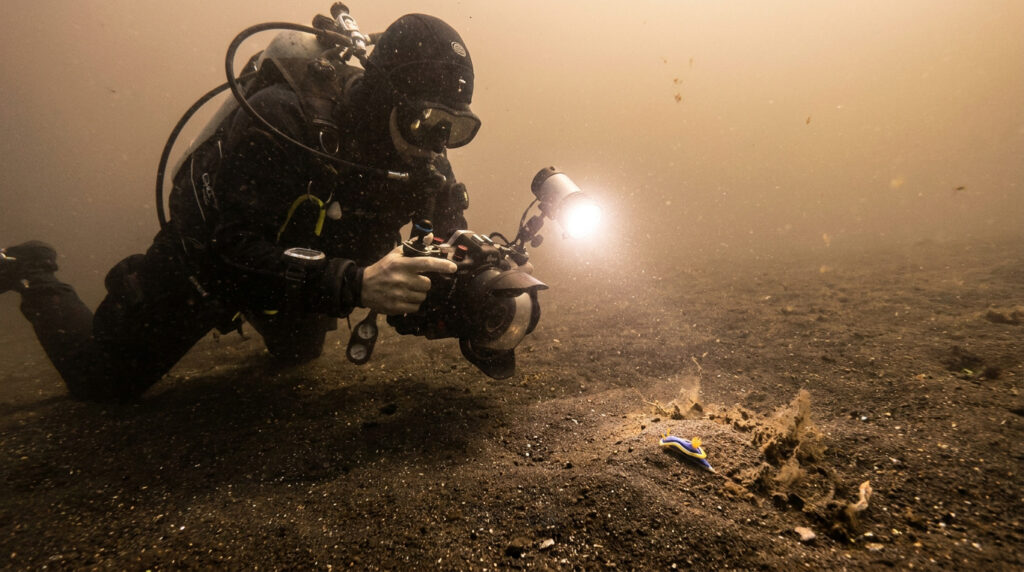
Anilao sits on the Verde Island Passage, which the California Academy of Sciences named in 2006 the “center of the center of marine biodiversity.” The passage covers roughly 1.14 million hectares and is one of the most biodiverse stretches of ocean on the planet. What that means underwater is density: black volcanic sand slopes crawling with life that you would spend a whole trip hunting for elsewhere.
It is called the nudibranch capital of the world, with 600-plus recorded species, and the signature critter list reads like a photographer’s wishlist: blue-ringed octopus, flamboyant cuttlefish, mimic and wonderpus octopus, hairy frogfish, Rhinopias, pygmy seahorses, pipefish, and Bobbit worms. This is muck diving, slow, close-up, over unglamorous sandy bottoms where the reward is what you find, not the scenery.
Anilao is also one of the world’s best blackwater destinations: night drift dives over deep water, hanging in the dark under lights while larval-stage fish and pelagic invertebrates rise from below, many of them barely described by science. It is a different kind of diving entirely, and a big reason serious underwater photographers keep coming back.
The dive sites worth knowing
| Site | Known for |
|---|---|
| Secret Bay (Mainit Muck) | Arguably Anilao’s most famous muck site: dark sand slope, a treasure trove of rare critters and cephalopods, exceptional at night |
| Basura | A silty slope (community-protected now) that draws frogfish, seahorses, and rare nudibranchs |
| Twin Rocks | Two rocks in a coral garden full of small fish, schooling jacks, and resident juvenile turtles: works for both macro and wide-angle |
| Mainit Point | Current-swept reef in the Maricaban Strait: coral, plus bigger species (trevally, whitetip reef sharks, dogtooth tuna) in the nutrient-rich flow |
| Anilao Pier | A silty man-made pier environment that is surprisingly rich in unique macro critters, and a strong night dive |
When to go
The main dive season is roughly November to May, the Philippine dry season, driven by the amihan (dry northeast monsoon) that flattens the seas, cuts river runoff, and delivers the year’s best visibility, consistently around 15 to 22 metres at reef sites. November and December, then April and May, are the peak months; April and May are also the most crowded. Late March to mid-May is the window most operators point to as the best overall.
Water is warm year-round, roughly 25 to 30 degrees Celsius, sitting around 27.5 in general, dipping to about 25 in January and February and climbing toward 30 by June. Blackwater diving runs across the main season, with March to June cited as the strongest window for larval and pelagic activity. The typhoon season affects Batangas on and off from July to October, when freshwater runoff drops the visibility, though plenty of days stay diveable and protected sites like Twin Rocks remain accessible.
Is Anilao for you? Experience and certification
For most of Anilao, yes, even as a new diver. The area has 50-plus dive sites and the large majority are beginner-friendly: shallow (around 10 to 20 metres), close to shore, with minimal current, which is exactly what a freshly certified Open Water diver wants. Operators list the destination as suitable for all levels.
Two things call for more experience. The current-swept Maricaban Strait sites, Mainit Point and Beatrice Rock among them, have real tidal flow that rewards an Advanced certification or solid drift experience. And blackwater is a step up from standard muck diving: a night drift over open water is not a first-week dive. Anilao dive centres run PADI and SSI courses from Open Water upward, so you can also certify or take a drift specialty on the trip.
What to pack for a Singapore diver
Exposure is simple: a 3mm full wetsuit with booties is the standard here, with light gloves or a hood optional for divers doing repetitive days. That is the same suit you would wear for most tropical diving, so if you have read our wetsuit guide you are already sorted; a 3mm full covers Anilao’s 25 to 30 degree water comfortably. Beyond that: target the November-to-May window, pre-book your resort transfer from Manila, and expect reef visibility around 15 to 22 metres in season.
The photographer’s destination
If you shoot underwater, Anilao is close to the top of the list. It is a world-famous macro-photography destination, hosts major workshops (Backscatter and Crystal Blue run macro and blackwater sessions there), and has its own chapter in the Underwater Photography Guide. The reason is the combination: shallow, calm, subject-dense muck sites where you can settle in front of a frogfish or a flamboyant cuttlefish and work the shot without fighting current or depth. If you are building a macro rig for a trip like this, our underwater camera guide covers housings, trays, and the video lights that make black-sand critters pop.
Frequently asked questions
How do you get from Manila to Anilao?
Overland only, there is no passenger ferry. Budget 2.5 to 3 hours by road via SLEX and the STAR Tollway, and 3 to 4.5 hours on Friday or holiday traffic. Most resorts arrange a private transfer, which is the easiest option after a flight.
Is Anilao good for beginners?
Yes. Most of its 50-plus sites are shallow, close to shore, and low-current, which suits new Open Water divers. The exceptions are the current-swept Maricaban Strait sites and blackwater night dives, which want Advanced or drift experience.
What is muck diving?
Diving over sandy or silty bottoms to find small, camouflaged, often rare creatures: frogfish, octopus, nudibranchs, seahorses. The scenery is plain; the payoff is what you spot. Anilao is one of the world’s best places to do it.
What wetsuit do I need for Anilao?
A 3mm full wetsuit with booties. The water sits around 25 to 30 degrees Celsius, coolest (about 25) in January and February. Add light gloves or a hood if you are diving several days back to back.
When is the best time to dive Anilao?
November to May, the dry season, for calm seas and the best visibility. April and May are the peak (and busiest). Blackwater peaks March to June. July to October is typhoon season with reduced visibility, though many days still dive.
Do I need my own camera to enjoy Anilao?
No, but it is a shame not to bring one. Anilao is a macro-photography mecca, and the slow, shallow, critter-dense dives are made for it. Even a compact or phone housing goes a long way here; our camera guide covers the options.
Anilao is the trip you take when you have caught the macro bug: closer, cheaper to reach than most people think, and unmatched for critters and blackwater. Planning where to dive from Singapore more broadly? See our roundup of dive trips from Singapore, or the detailed Bali and Tioman guides. Gearing up first? Come try masks, suits, and camera setups at the shop at 178 Paya Lebar Road.