
Bali Diving from Singapore: Getting There, Seasons, Sites
Bali diving from Singapore starts with a direct flight of about 2 hours 45 minutes from Changi to Denpasar, and Singapore Airlines alone runs roughly six flights a day from Terminal 2. That short hop buys more dive-region variety than anywhere else within easy reach of Singapore: a world-famous wreck at Tulamben, easy macro at Amed and Padang Bai, wall diving at Menjangan, and mantas and mola at Nusa Penida. This guide covers getting there, which region suits which diver, the seasons, and the one cold-water surprise that catches Singapore divers out, written from the gear counter that packs divers off to Bali every month.
How do you get to Bali from Singapore?
Fly direct. The Singapore to Denpasar route is about 1,681 km, and nonstop scheduled times run from 2h35 to about 2h50; Singapore Airlines flies it in around 2h45 with roughly six departures a day from Changi Terminal 2. Compare that with the 5 to 7 hours door to door that Tioman takes by coach and ferry, and Bali stops looking like the ambitious option. You can finish breakfast in Singapore and be rinsing gear in Sanur by mid-afternoon.
Most dive operators run day trips out of the Sanur area on the southeast coast, which puts you 30 to 45 minutes by speedboat from Nusa Penida, and mainland regions like Tulamben and Amed work as either a road trip from the south or a few nights based on the northeast coast.
The dive regions, and what each one is for
| Region | Known for | Who it suits |
|---|---|---|
| Tulamben | The USAT Liberty shipwreck at 5-30 m, entered from the beach; also a noted muck and macro area | Everyone from Open Water up; conditions are stable and beginner-friendly year-round |
| Amed | Variety in a small area: the shallow Japanese Wreck at 6-12 m, the Pyramids at around 20 m, Jemeluk Wall with its gorgonians; gentle drift dives, coral gardens, turtles, whitetip reef sharks, and dense macro | All levels; divers who want several different dives without moving base |
| Nusa Penida | The big animals: reef mantas at Manta Point year-round, mola at Crystal Bay in season | Drift divers; currents are strong and sometimes unpredictable, so experience matters |
| Menjangan | Bali’s best wall diving inside West Bali National Park, walls from about 10 m down past 26-60 m | Beginners and photographers; currents over 1 knot are unusual and visibility can hit 30-50 m |
| Padang Bai | Blue Lagoon: a calm, protected white-sand bay with 15-20 m visibility and rarely any current | Courses, intro dives, and macro hunters: seahorses, pipefish, frogfish, leaf scorpionfish, nudibranchs |
Tulamben: the wreck everyone comes for
The USAT Liberty is Bali’s most famous dive site and one of the most accessible wrecks anywhere: around 120 metres of ship lying on a slope between 5 and 30 metres, reached by walking in off the beach and making a short surface swim to the descent point. The history is worth knowing before you drop in: the Liberty was torpedoed by the Japanese submarine I-166 on 11 January 1942 and beached at Tulamben, then the 1963 Mount Agung eruption pushed the hull off the shore and underwater, splitting it. Because the shallow sections start at 5 metres, an Open Water diver gets a real wreck dive without going anywhere near their depth limit.
Nusa Penida: mantas and mola
Across the Badung Strait from Sanur, Penida is the big-animal ticket. Manta Point on the southwest coast has cleaning stations where reef mantas turn up year-round with remarkable reliability; operators cite 90 to 95 percent success, and the main manta area is shallow, around 8 to 12 metres. Crystal Bay is the best-known cleaning station for mola, the oceanic sunfish, which show up when cold upwelling arrives from July to October. The trade-off is that Penida sites are drift dives with strong, sometimes unpredictable currents; Toyapakeh and SD Point get named specifically by operators for exactly that.
When is the best time to dive Bali?
Bali is diveable year-round, but it splits into two seasons: wet from roughly November to March or April, and dry from April to October. The dry season is the best overall window, with calm seas and visibility that can exceed 30 metres; the rainy season mainly costs you some of that visibility rather than the diving itself.
- Mola season: July to October, with August and September the peak months, driven by the cold upwelling around Nusa Penida.
- Mantas: year-round at Manta Point, with the most reliable sea conditions from April to October.
- Tulamben: stable and beginner-friendly in every month, with water at 26-28°C in the May to October dry season and up to 28-30°C in the rainy season.
If you want one trip that covers everything Bali diving from Singapore offers, aim for August or September: dry-season seas, peak mola odds, and mantas still on station.
How cold is Nusa Penida? The thermocline warning
This is the part of Bali diving that surprises Singapore divers most. Mainland Bali is as warm as you expect: 27-29°C is the dry-season norm, and Menjangan is the warmest area of all, with temperatures reported in the low 30s. Nusa Penida is a different animal. It runs noticeably cooler than the mainland, typically 23-25°C even outside the upwelling, and in mola season a thermocline appears at around 18 metres. The surface may read a friendly 26-27°C, then below the thermocline the water drops to 16-20°C, sometimes falling 5 to 6 degrees in seconds.
Pack accordingly. For Penida, treat a 3mm full suit as the absolute minimum, and that is only outside mola season. From July to October, resident operators recommend a 5mm full suit as the minimum, and many divers add a hooded vest on top; 16-18°C through a thin tropical wetsuit is genuinely miserable, and cold divers burn gas faster and call dives earlier. Our wetsuit guide walks through the 3mm versus 5mm decision in detail. If you run cold even in a 5mm, the AKUANA Opah X heating vest ($680) is a heated base layer worn under the wetsuit that warms the water trapped against your body.

How a Penida day trip works
The standard format is simple and civilised. Dive boats leave from Sanur, and the crossing to Nusa Penida takes about 30 to 45 minutes by speedboat. A typical day runs: hotel pickup, boats away around 8:30 to 9:00 am, two or three dives with lunch on the boat, and back in Sanur around 2 pm on a two-dive day or 4:00 to 4:30 pm with three dives. Sanur harbour also runs more than ten public fast-boat crossings to Penida daily from about 06:30 if you would rather stay on the island itself; mornings have the calmest seas either way, which is one more argument for the early start.
Do you need Advanced Open Water for Nusa Penida?
For the current-exposed sites, effectively yes. Penida dives are drift dives, and operators advise Advanced Open Water or equivalent experience for the sites with current; some shops flatly restrict current dives to AOW divers. One resident operator runs Crystal Bay in mola season as an Advanced Open Water dive with 30 logged dives required, citing the combination of cold, current, and depth. The standard preparation is the PADI Drift Diver specialty or the drift adventure dive within the AOW course, both of which are taught on Penida itself.
The smarter play is arriving already qualified. Our PADI Open Water course ($838) gets you certified here in Singapore, and the Advanced Open Water course ($838) adds the deep and navigation training that Penida operators want to see, all without spending your Bali holiday in a classroom.
What should you pack for Bali diving?
- Exposure protection: a 3mm covers the warm mainland sites at Tulamben, Amed, Padang Bai, and Menjangan. For Penida, 3mm is the floor; in mola season bring a 5mm full suit and consider a hooded vest. The wetsuit guide has the full logic.
- Your own mask: the cheapest comfort upgrade over rental bins, fitted in store so it seals on your face, not a mannequin’s.
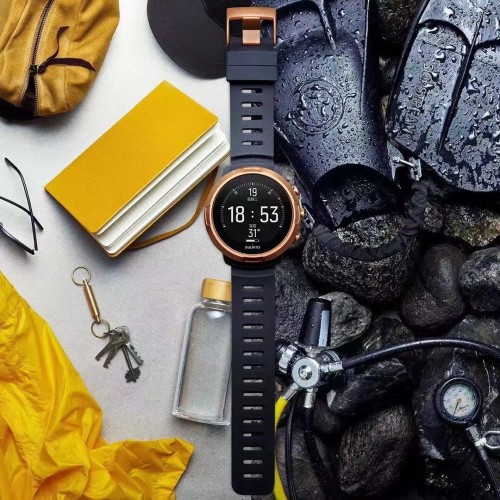
- Dive computer: three boat dives a day is exactly when you want your own nitrogen tracking. The Suunto Zoop Novo ($380) covers recreational Bali completely; the Suunto D5 ($755 to $815) adds a colour screen and app sync. Undecided? Start with the dive computer buying guide.
- Camera: Manta Point sits at 8 to 12 metres in open blue water, which is as forgiving as big-animal photography gets. Browse camera gear before you fly.
- Certification cards and logbook: Penida operators check experience for the current sites; arrive able to prove yours.
Frequently asked questions
How long is the flight from Singapore to Bali?
Nonstop scheduled times run 2h35 to about 2h50. Singapore Airlines flies Changi Terminal 2 to Denpasar in around 2h45, with roughly six flights a day, so timing a dive trip around work is easy.
When is mola season at Nusa Penida?
July to October, with August and September the peak, driven by cold upwelling. Crystal Bay is the best-known mola cleaning-station site. Expect a thermocline around 18 metres and pack a 5mm suit as the minimum in these months.
Can you see manta rays year-round in Bali?
Yes. Manta Point on Nusa Penida’s southwest coast has cleaning stations where reef mantas are seen year-round, and operators cite 90 to 95 percent success. The main manta area is shallow, around 8 to 12 metres; sea conditions are most reliable from April to October.
Is Bali diving suitable for beginners?
Large parts of it, yes. The Liberty wreck at Tulamben is a shore dive with depth for everyone from Open Water level up, Blue Lagoon at Padang Bai is a calm bay used for courses and intro dives, and Menjangan’s walls rarely see current over 1 knot. Nusa Penida’s drift dives are the exception; save those for after some experience.
What wetsuit do I need for Bali?
A 3mm is comfortable on the warm mainland sites at 26-30°C. For Nusa Penida, treat 3mm as the absolute minimum and only outside mola season; from July to October operators recommend a 5mm full suit, and many divers add a hooded vest for the 16-20°C thermocline water.
Do I need Advanced Open Water for Nusa Penida?
Operators advise AOW or equivalent experience for the current-exposed drift sites, and some shops require it outright; one resident operator asks for AOW plus 30 logged dives for Crystal Bay in mola season. Our Advanced Open Water course ($838) sorts the prerequisite before you fly.
Bali or Tioman for my next trip from Singapore?
Different jobs. Tioman is the overland weekend classic at 5 to 7 hours door to door, but it effectively closes from November to early March. Bali is a 2h45 flight, dives year-round, and packs wreck, macro, walls, and big animals into one island. Our where to dive from Singapore guide ranks all the options side by side.
Planning the trip? Start with our full rundown of dive trips from Singapore, then come by the store at 178 Paya Lebar Road and we will kit you out from 3mm to 5mm, mask to computer, before you fly. Prefer to plan from the sofa? WhatsApp us at 9800 0539; orders ship with flat $8 tracked delivery anywhere in Singapore.