
Scuba Diving Travel Insurance for Singapore Divers
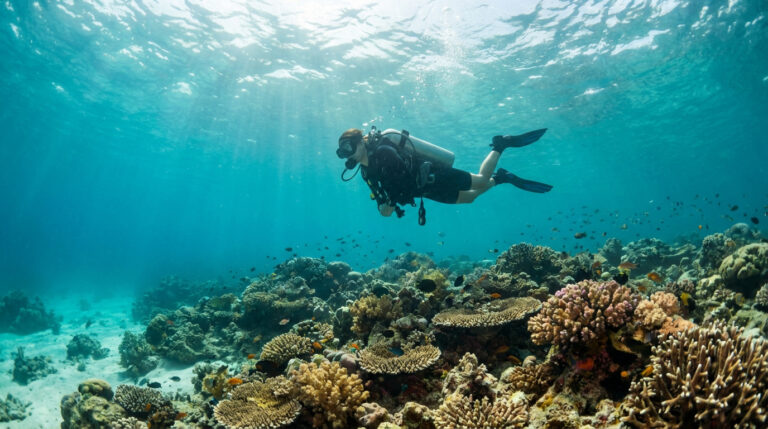
For most Singapore divers, the honest answer is that a standard travel insurance policy may not cover scuba diving the way you assume it does. Many mainstream policies either exclude diving outright, cover it only if you are certified, or cap it at a shallow recreational depth (often around 30 metres). Before any overseas dive trip, the things worth checking are whether the policy covers decompression illness (DCI) treatment and hyperbaric chamber costs, emergency medical evacuation, and repatriation, plus any depth or certification limits buried in the fine print.
Why standard travel insurance often falls short for divers
Travel insurance is written for the general traveller, not the diver. Insurers treat scuba as a higher-risk activity, so the default position in many policies is either a blanket exclusion or a narrow allowance with conditions attached.
The gap that catches people out is not the trip cancellation or lost-baggage cover, which usually works fine. It is the medical side. A diving injury can mean a hyperbaric chamber session, a specialist evacuation, or repatriation home, and those are exactly the costs a generic policy may quietly exclude when the injury happened underwater.
If you are new to the sport and still working toward certification, it is worth understanding these limits early. Many divers first hit this question when they move from learning to dive and getting certified to booking their first real trip abroad.
The critical things to check in any policy
Whatever policy you are looking at, these are the clauses that actually matter for a diver. Read them before you buy, not after an incident.
- Decompression illness (DCI) cover: Confirm that treatment for DCI, including recompression in a hyperbaric chamber, is included and not excluded as a diving-related condition.
- Emergency medical evacuation: Many dive sites are remote. Evacuation from a boat or a small island to a suitable hospital or chamber can be extremely expensive, so check this is covered and note any cap.
- Repatriation: Cover to bring you back to Singapore for continued treatment, or in the worst case, repatriation of remains.
- Depth limit: Check the maximum depth the policy covers you to. A common cutoff sits around 30 metres, which is fine for most recreational dives but not for deeper ones.
- Certification requirement: Some policies only cover you if you dive within your certification level and with a qualified guide or instructor.
Standard travel insurance vs specialist dive cover
Broadly, you are choosing between a general travel policy (sometimes with a diving add-on) and cover from a specialist diver organisation. A well-known example of the specialist route is DAN, the Divers Alert Network, which operates in this region as DAN Asia-Pacific and focuses specifically on diving injuries and DCI. The table below shows how the two types typically compare. Treat it as a general guide, since exact terms always vary by policy.
| What to check | Standard travel insurance | Specialist dive cover |
|---|---|---|
| Recreational depth | Often capped (commonly around 30 metres) or only if certified | Usually built around recreational diving, often to deeper limits |
| DCI and chamber cover | May be excluded or limited | Typically a core focus |
| Emergency medical evacuation | Varies; check the cap and whether diving is excluded | Commonly included and dive-aware |
| Gear cover | Sometimes, often as generic baggage with low limits | May offer dedicated equipment cover |
| Technical or solo diving | Frequently excluded | Sometimes available as a higher tier |
Neither option is automatically right. A recreational diver on a shallow reef trip has different needs from someone doing deeper or technical dives, so read what each actually covers rather than assuming the specialist option is always necessary or the standard one is always enough.
Depth limits and the qualified-versus-training clause
Two of the most misread clauses are depth and dive status. On depth, if a policy covers you to 30 metres and you descend past that, a resulting claim can be refused. Know your planned depths for the trip before you choose cover.
The second is the difference between a qualified dive and a training dive. Some policies cover you for dives within your existing certification but exclude, or treat differently, dives taken as part of a course. If you plan to take a course on your trip, for example continuing your progression through the options on our Singapore diving courses and then doing your qualifying dives abroad, check that training dives are included.
Technical, solo, and deep diving
Technical diving, solo diving, and deeper dives are commonly excluded from standard cover and are not always included even in specialist recreational policies. If your trip involves any of these, confirm it explicitly rather than assuming.
What dive operators may ask for
Insurance is not only about protecting yourself financially. Some dive operators and liveaboards ask for proof of dive-specific insurance before they let you dive, particularly for more remote or advanced trips.
This is worth checking when you plan where to go. If you are still deciding, our guide on where to dive from Singapore is a good starting point, and popular options like a Bali dive trip from Singapore or a closer Tioman diving trip in Malaysia each come with their own logistics. Confirm the operator’s insurance requirements alongside your booking so there are no surprises at the dive centre.
Gear cover and the trip basics
Dive equipment is expensive, and standard travel policies often fold it into general baggage cover with per-item limits that fall short of what a full kit is worth. If you travel with your own regulator, computer, or camera, check the per-item limit and whether dedicated equipment cover is available.
Beyond diving specifics, the usual travel-insurance basics still apply: trip cancellation, delays, and general medical cover for the non-diving parts of your holiday. The diving clauses sit on top of these, not instead of them.
A simple pre-trip insurance checklist
Before you pay for any dive trip, run through this quickly. It takes minutes and can save a very large bill later.
- Does the policy cover scuba diving at all, and up to what depth?
- Are DCI treatment and hyperbaric chamber costs included?
- Is emergency medical evacuation covered, and what is the cap?
- Is repatriation to Singapore included?
- Are you covered within your certification level, and are training dives included if you plan a course?
- Is gear covered adequately, or only as low-limit baggage?
- Does your dive operator require proof of insurance?
Once you have clear answers to those, you can book with confidence. For more trip planning, browse our full set of Singapore dive guides.
Frequently asked questions
Does normal travel insurance cover scuba diving?
Not always. Many standard travel insurance policies either exclude scuba diving, cover it only if you are certified, or cap it at a shallow depth such as around 30 metres. Always read the activities and exclusions sections before you assume you are covered.
What depth does travel insurance usually cover for diving?
It varies by policy, but a common cutoff sits around 30 metres for recreational diving. If you plan to dive deeper, check the specific depth limit, because a claim can be refused if you exceed it.
What is DAN and do I need it?
DAN, the Divers Alert Network (operating in this region as DAN Asia-Pacific), is a diver-focused organisation associated with diving safety and DCI. It is one example of specialist dive cover. Whether you need it depends on your diving: some divers use it alongside or instead of a general policy, so compare what each option actually covers for your trip.
Will a dive operator ask to see my insurance?
Some do. Certain dive operators and liveaboards, especially for remote or advanced trips, ask for proof of dive-specific insurance before you dive. Check the operator’s requirements when you book so you are not caught out at the dive centre.
Is my dive gear covered by travel insurance?
Often only partially. Standard policies tend to treat gear as general baggage with low per-item limits that may not match the value of a full dive kit. Check the per-item limit, and look for dedicated equipment cover if you travel with your own regulator, computer, or camera.