
Wetsuit Guide: What to Wear for Tropical Diving (Singapore Prices)
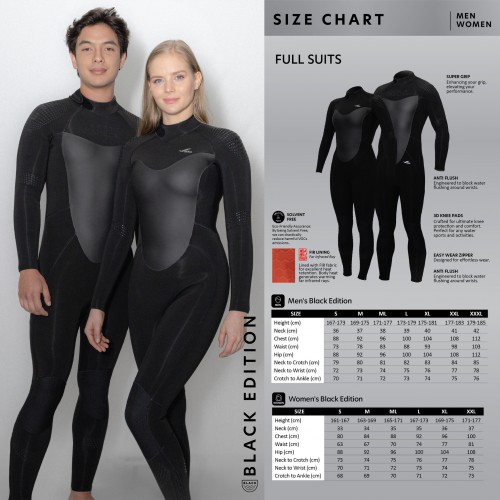
“It’s 30-degree water, do I even need a wetsuit?” is the most common suit question we get in the shop, and the honest answer is: probably yes, but thinner than you think. Water pulls heat from your body roughly 20-25 times faster than air, so even bath-warm tropical water drains you over a 50-minute dive, and over three dives a day it drains you a lot. This guide covers what to wear at which temperature, what actually matters in fit, and what we stock in Singapore with real prices.
Thickness by water temperature
| Water temp | What to wear | Where you’ll meet it |
|---|---|---|
| 28-30°C | Rash guard, 1-2.5mm top, or 3mm by cold tolerance | Singapore, Tioman, most of SE Asia |
| 24-28°C | 3mm full suit | Deeper sites, night dives, repetitive days |
| 18-24°C | 5mm full suit | Bali’s southern thermoclines, temperate trips |
| Below 18°C | 7mm, hood and gloves, or a drysuit | Not our neighbourhood |
Two nuances the chart hides. First, neoprene compresses at depth and loses insulation, so a 3mm suit at 30 metres protects like something much thinner. Second, the famous tropical gotcha: Bali’s southern sites (Nusa Penida, Crystal Bay, the manta and mola sites) sit in upwelling zones where thermoclines can drop the water to 18-20°C mid-dive. Plenty of divers have shivered through a Penida dive in the rash guard that was perfect in Tioman the month before. Going there? Bring the 3mm minimum.
Why wear anything at 29 degrees?
Three reasons beyond warmth. Repetitive diving: one easy reef dive in board shorts is fine, but the third dive of the day is where the shivering starts, and cold divers burn gas faster and end dives earlier. Protection: a suit is a barrier against sun on surface swims, jellyfish and hydroid stings, and the reef scrapes that happen to everyone eventually. Consistency: your buoyancy and lead are calibrated to what you wear, and wearing the same thing every dive makes your weighting predictable.
Full suit, top, or rash guard? What we stock
3mm full suits, the tropical workhorse
- Gull Black Edition 3mm full suit, men’s and women’s, $685: FIR thermal lining that reflects your own body heat back at you, cut for Asian sizing.
- Gull Black Edition Aqua C bodysuit, $365: a women’s 3mm with a longer cut line for more coverage.
Tops and jackets, for divers who run warm
- Gull 3mm SCS Topper (men’s and women’s), $325: smooth-skin exterior that blocks wind chill on the boat between dives.
- Gull 3mm Skin Jacket, $285, and 2.5mm Jersey Jacket, $265 (both in men’s and women’s cuts): pair with board shorts or leggings for the classic tropical setup.
Rash guards, the minimum sensible layer
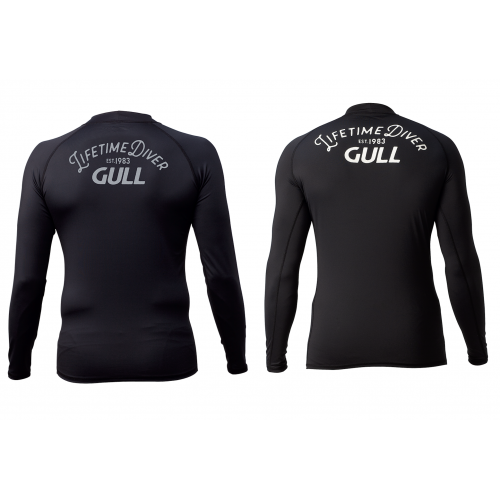
- Gull long-sleeve rash guards (men’s and women’s), $69: ceramic-coated fabric blocking 99% of UV. Full women’s range in our women’s rash guard guide.
- Gull Rash Parka, $140: the unisex throw-over for surface intervals.
Boots and gloves
Gull GS boots ($120) and Short Mew boots ($98) for open-heel fins, SP short gloves ($94) and Scubapro 1.5mm Tropic gloves (from $85) for warm-water hands. One honest note: we don’t currently stock shorty suits; the tropical divers we outfit overwhelmingly choose full 3mm or a top-plus-rash-guard combination instead.
Fit: the difference between warm and useless
A wetsuit works by trapping a thin film of water your body heats once. Too loose and that water flushes through with every kick, taking your heat with it: a loose wetsuit is barely better than none. Snug everywhere, no gaping at the lower back, neck, or armpits, full range of motion in the shoulders: that’s the target. Men’s and women’s suits are genuinely different cuts, not marketing. And neoprene floats: a 3mm full suit adds buoyancy you’ll offset with roughly a kilo or two of lead, another reason to wear the same suit every dive. The only reliable fit test is putting it on, which is what the store is for.
Looking after neoprene
- Rinse in fresh water after every dive day; soak after every trip.
- Dry inside-out first, in shade, never in direct sun.
- Hang on a wide hanger or fold flat; a thin wire hanger creases the shoulders permanently.
- A little wetsuit shampoo occasionally keeps the neoprene supple and the smell civilised.
Frequently asked questions
Is a 3mm wetsuit enough for Southeast Asia?
Yes, for almost everything: Singapore, Tioman, and most of the region sit at 27-30°C where 3mm is the comfortable ceiling. The exception is Bali’s southern thermocline sites, where 3mm is the minimum and cold-prone divers bring 5mm.
Can I dive in just a rash guard?
For one easy shallow dive in 29-30°C water, plenty of divers do. For repetitive dives, night dives, or anywhere with current and depth, you’ll want neoprene: the third dive of the day is always the coldest.
How much does a diving wetsuit cost in Singapore?
From our shelf: rash guards from $69, neoprene jackets and tops $265-$325, and full 3mm suits $365-$685 depending on cut and lining technology.
Do I ever need a drysuit around here?
Not in tropical Southeast Asia. Drysuits start making sense below roughly 15-18°C: temperate wrecks, high latitudes, deep technical profiles: none of which describes a Tioman weekend.
Wetsuit for snorkelling vs diving: same thing?
Same materials, same fit rules. Snorkellers stay at the warm surface so they can go thinner; the rash guards and 2.5mm jackets in this guide double perfectly for snorkelling trips.
What should I pack for Tioman?
Water there runs 27-30°C in season: a rash guard plus 3mm top, or a 3mm full if you run cold. Full packing logic is in our Tioman diving guide.
Not sure which way to go? Browse all suits and thermal layers with live stock, or come to the store and try three options on in ten minutes. Sizing for a course? Your gear discount starts the day you certify with us.