
Dive Boots and Gloves Guide: Thermal in the Tropics
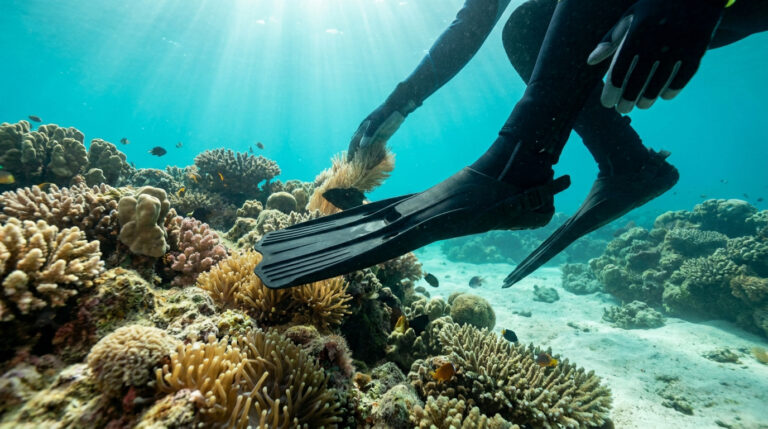
In water as warm as Singapore’s, dive boots and gloves are mostly about protection, not warmth. Our reefs at Pulau Hantu and Lazarus Island sit around 28 to 30 degrees Celsius, so you will not freeze without them. What you will feel is a scraped heel from a boat ladder, a bruised sole on a rocky jetty, or a cut palm from a barnacle-covered wreck line. A pair of 3mm to 5mm neoprene boots and, where permitted, a thin 1.5mm to 2mm glove solves all three without cooking your hands and feet.
Do you actually need boots and gloves in warm water?
Thermal insulation is the last reason to buy boots and gloves for local diving. The water here rarely drops below 27 degrees, and most divers are comfortable in a 3mm wetsuit. The real jobs these two pieces of kit do are different:
- Boots protect your feet on shore entries, slippery pontoons, sharp shell beds and the metal rungs of a boat ladder. They also stop open-heel fins from chafing the top of your foot and your Achilles.
- Gloves protect your hands when you hold a shotline in current, steady yourself near a wreck, or carry tanks and weights on a rocking deck.
- Both add a thin layer of warmth for repetitive dives. On a three-dive day your extremities lose heat first, and a little neoprene keeps you comfortable on that last dive of the afternoon.
So the honest answer for tropical diving is: boots are close to essential, gloves are situational, and neither is really about staying warm. If you are still gathering your kit for a course, our PADI diving courses in Singapore include guidance on exactly what you need to buy versus what the school provides.
Dive boots: low cut versus high cut
Boots come in two broad styles, and the right one depends on how you enter the water and which fins you own. Almost all boots are worn with open-heel fins, where the fin foot pocket is a little oversized and a strap holds your heel in place.
- Low cut boots sit below the ankle, pack small and suit boat diving where you step straight from the deck into the water. The Dive Box 5mm Low Cut Diving Boots at S$30 are a sensible first pair for local trips.
- High cut boots rise over the ankle, add support and stop sand and grit getting in on shore entries. The Dive Box 5mm High Cut Diving Boots at S$58 give more coverage, and the Scubapro 5mm Delta Boots at S$95 add a moulded sole and a chunkier zip for years of hard use.
If you prefer a Japanese-made option, the Gull Short Mew Boots at S$98 are cut specifically for Gull’s Mew fins, while the taller Gull GS Diving Boots at S$120 give a snug, supportive fit for divers who want the best seal against water flushing.
Fin socks versus dive boots
Not everyone needs a full boot. If you dive with full-foot fins, which have a closed heel and no strap, you cannot wear a hard-soled boot at all. Instead you wear a thin neoprene sock inside the fin to stop rubbing and blisters. The Gull Fin Socks at S$48 and the Problue Low Cut Neoprene Socks at S$35 both do this well. Here is how the two options compare for local diving:
| Feature | Neoprene boots | Fin socks |
|---|---|---|
| Fin type | Open-heel fins | Full-foot fins |
| Foot protection | High: sole guards against coral and rungs | Low: soft neoprene only |
| Shore and jetty walking | Comfortable and safe | Not suitable |
| Warmth on repeat dives | 3mm to 5mm of insulation | Minimal |
| Packing size | Bulkier | Very compact |
| Typical local price | S$30 to S$120 | S$35 to S$48 |
For most divers heading out to dive sites around Singapore, a 5mm boot with open-heel fins is the more versatile choice because it handles boat ladders, rocky landings and the occasional shore entry without complaint.
Dive gloves in the tropics: protection, not warmth
Gloves are the piece of kit divers argue about most. In warm water you do not need them to stay warm, so the only reason to wear them is to protect your hands from cuts, barnacles and stings when you have a genuine reason to touch something, such as holding a line on a wreck or steadying yourself in current. Good tropical options are deliberately thin so you keep dexterity:
- Scubapro 1.5mm Tropic Gloves at S$85: a slim, hard-wearing glove made for warm water.
- Mares 2mm Flexa Touch Gloves at S$37: touchscreen-friendly fingertips and a great value pick.
- Seac Sub 2.5mm Anatomic HD Gloves at S$25: a durable budget glove with reinforced palms.
Be aware that many marine parks and reef operators ban gloves outright. The reasoning is simple: a bare hand makes you think twice before grabbing coral, while a gloved hand tempts divers into touching things they should leave alone. Even where gloves are allowed, the rule underwater is the same as always: hands off the reef, and keep your fins and gauges from dragging across it too.
How to size, fit and care for boots and gloves
A good fit is the difference between kit you forget about and kit that ruins a dive. Work through these steps:
- Try boots with a fin. A boot should be snug with no heel lift and no pinched toes. Then check it in your actual fin foot pocket, because a boot that fits your foot can still be too bulky for the fin.
- Wet-test gloves. Neoprene loosens slightly in water, so a glove that feels firm and dry is usually right. You should still be able to pinch a mask strap and open a clip.
- Rinse in fresh water after every dive to flush out salt and sand, which grind at seams and zips over time.
- Dry in the shade and never leave neoprene baking in a hot car, since heat and UV break it down fast in our climate.
- Store flat or loosely rolled rather than crushed at the bottom of your bag, so the neoprene keeps its shape.
If you are unsure what suits your feet, the best move is to try a few pairs in person. You are welcome to visit the shop at 178 Paya Lebar Road #03-03, or browse the full range through our dive gear guides before you decide.
Matching boots and gloves to your diving
Your first purchase should match how you dive most often. New divers taking their training dives at Pulau Hantu and Lazarus Island will get the most use from a 5mm high cut boot and, if permitted on the day, a thin protective glove. Photographers and those diving wrecks lean towards a slightly tougher glove for grip. Travellers heading to colder destinations later may prefer a 5mm boot they can also use in cooler seas. Whatever your plan, buy the boot first, the glove second, and only pay for extra thickness if a specific trip demands it.
Frequently asked questions
Do I need dive boots for warm Singapore water?
For warmth, no. For protection, yes. Boots guard your feet against boat ladders, rocky entries and sharp shells, and they stop open-heel fins from chafing. A 3mm to 5mm boot is ideal for our 28 to 30 degree water.
What thickness of boots should I buy for the tropics?
A 5mm boot is the most versatile single choice. It is comfortable in local water and still works on cooler regional trips. If you only ever dive warm water and want minimal bulk, a 3mm boot or a low cut style is fine.
Can I wear gloves on the reef in Singapore?
Sometimes. Many marine parks and operators ban gloves to discourage touching coral, so always check the rules for the site you are diving. Where gloves are allowed, choose a thin 1.5mm to 2.5mm glove and still keep your hands off the reef.
What is the difference between fin socks and dive boots?
Fin socks are thin neoprene worn inside full-foot fins to prevent blisters, with little foot protection. Dive boots have a hard sole, are worn with open-heel fins, and protect your feet on land and in the water.
Do boots and gloves work with any fins?
Boots are made for open-heel fins with an adjustable strap. Full-foot fins need thin fin socks instead, since a hard-soled boot will not fit inside them. Always test your boot in your own fin pocket before buying.