
Diving Fins Buying Guide: Blade Types and Fit
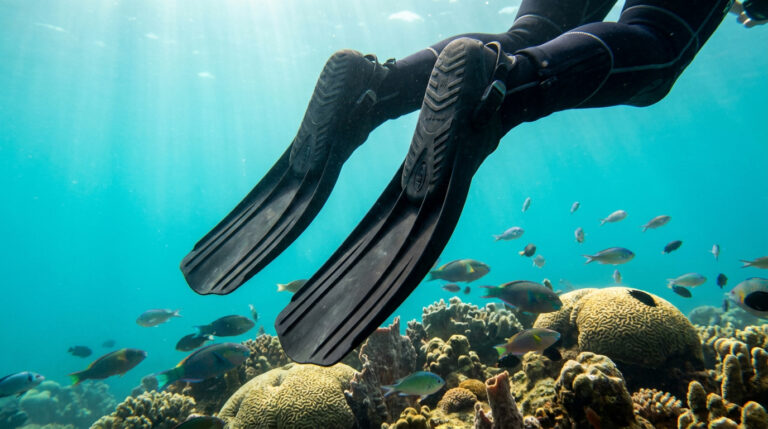
Choosing diving fins comes down to two decisions: the blade, which is how the fin moves water, and the foot pocket, which is how the fin attaches to your foot. For warm tropical diving out of Singapore, most divers are well served by a moderate paddle or channel blade in either a full-foot pocket for barefoot boat dives or an open-heel pocket worn over boots. This guide walks through blade types, pocket styles, sizing, and the fins we actually stock, so you can pick a pair that handles Pulau Hantu shore entries and regional liveaboard travel with equal ease.
Blade types: how fins turn leg power into thrust
The blade is the working surface of the fin. Different blade designs trade power, efficiency, and manoeuvrability against each other, so the right one depends on your kicking style and where you dive.
- Paddle blade. The classic solid blade. Predictable, powerful, and precise, it suits every kick from a strong flutter to a tidy frog kick. This is the safe default for most recreational divers and the standard for technical divers who need control in tight spaces.
- Channel blade. A paddle blade with flexible panels and stiffer rails. During the kick the blade cups into a shallow U shape, channelling water down the centre and off the tip for smooth, efficient thrust. Mares built its reputation on this design.
- Split blade. The blade is split down the middle so each half flexes like a propeller. Splits deliver an easy, low-effort flutter that is kind to the ankles and knees, which many divers with joint niggles appreciate. The trade-off is weaker backing up and less bite for frog kicking or fighting current.
- Vented and jet-style blades. Short, stiff, negatively buoyant paddle fins with vents near the pocket that reduce drag on the recovery stroke. Loved by technical, wreck, and drysuit divers for pinpoint frog kicks, back kicks, and helicopter turns.
Open-heel versus full-foot: which pocket suits Singapore diving
The foot pocket decides how you wear the fin and, in practice, how you buy the rest of your footwear. Both styles work perfectly well in our warm water, so the choice is about how and where you dive rather than temperature.
Full-foot fins slip on barefoot like a slipper and enclose the whole foot including the heel. They are lighter, more streamlined, and pack smaller, which makes them a favourite for boat dives and travel. The catch is that sizing is fixed, so they either fit or they do not, and you cannot wear protective boots with them.
Open-heel fins have a rigid pocket and an adjustable strap or bungee, and they are worn over neoprene boots. The boots add grip for rocky shore entries, warmth on longer dives, and a wide fit tolerance, since one size of fin covers several boot sizes. They are bulkier and heavier to fly with, but far more versatile.
| Feature | Full-foot fins | Open-heel fins |
|---|---|---|
| Worn with | Bare feet or thin socks | Neoprene dive boots |
| Best for | Warm-water boat dives, travel | Shore entries, all-round local diving |
| Sizing | Fixed, must fit exactly | Adjustable strap, forgiving |
| Foot protection | None | Boots guard against rocks and jetties |
| Travel weight | Lighter, packs small | Heavier and bulkier |
| Typical use here | Liveaboards, Tioman boat dives | Pulau Hantu and Lazarus Island shore dives |
Getting the fit right
Fin fit is the difference between a comfortable dive and a session cut short by cramp or blisters. Fit is also the single most common reason divers dislike a fin they otherwise chose well. Work through these checks before you commit.
- Full-foot: size like a shoe, but try the exact model. Pockets vary a lot between brands, so a medium in one range is not a medium in another. The pocket should hug the foot with no heel lift and no pinching across the toes.
- Open-heel: always fit with your boots on. The extra neoprene changes everything. Your heel should sit snugly against the back of the pocket with the strap relaxed, and there should be no gap under the arch.
- Check for heel lift. Kick gently while seated. If your heel pulls out of the pocket, the fin is too big and will chafe and waste energy.
- Mind the strap. A spring or bungee heel strap self-adjusts and is far easier to don in the water than a buckle strap. Many divers upgrade to one for exactly this reason.
- Consider socks for full-foot fins. A thin neoprene or lycra sock prevents rubbing on the top of the foot and around the ankle without changing the fit much.
Matching fins to how and where you dive
There is no single best fin, only the best fin for your diving. Here is how the choices map onto the diving most of our customers actually do.
- Warm-water travel and boat diving. A light full-foot fin or a compact travel-friendly open-heel keeps luggage weight down. If you are training towards your PADI certification with us, this is usually where your first fins land.
- Local shore dives. For entries at Pulau Hantu or Lazarus Island, open-heel fins over sturdy boots protect your feet on rock and concrete. See where to dive from Singapore for the sites we train and fun-dive at.
- Technical, wreck, and current diving. Choose a stiff vented paddle for control, precise trim, and reliable back kicks in overhead or low-visibility conditions.
- Easy cruising and gentle joints. A split fin lowers the effort per kick, which suits relaxed reef dives and divers who want to protect their knees and ankles.
Not sure yet? Browse our full gear guides to see how fins fit alongside masks, boots, and the rest of your kit before you buy.
Diving fins we stock at DiveSingapore
Every fin below is in our catalogue with current pricing. Prices are in Singapore dollars and may change, so tap through for the latest.
- Mares Avanti Quattro Plus (S$140). A benchmark channel-blade open-heel fin. Powerful, versatile, and a long-running favourite for divers who want one pair to do everything.
- Scubapro Go Sport (S$180). A compact, travel-friendly open-heel with a self-adjusting bungee strap. Light in the bag, easy to don, and happy over boots or bare feet.
- Scubapro Jet Fins (S$230). The iconic vented paddle. Negatively buoyant and stiff, they are a go-to for technical and drysuit divers who live on the frog kick.
- Apeks RK3 (S$350). A modern take on the vented tech fin with a spring strap, built for control and durability.
- Scubapro Sea Wing Nova (S$195). A split-style open-heel that turns easy flutter kicks into efficient thrust, ideal for relaxed reef cruising.
- Gull Mew (S$175). A supple full-foot fin from Japan, prized for comfort and effortless cruising on warm-water boat dives.
- Gull Barracuda (S$610). A long-blade full-foot performance fin for divers chasing maximum efficiency and glide.
Straps, socks, and spares worth adding
A few small accessories make fins easier to live with and last longer. Keep a spare strap in your save-a-dive kit so a snapped buckle never ends your day.
- Gull Spring Fin Strap DX (S$115). A stainless spring strap that swaps out a fiddly buckle for a snug, self-adjusting fit.
- Gull Fin Socks (S$48). Thin socks that stop full-foot pockets rubbing on longer dives.
- Scubapro Modular Fin System Boot-Fit Pocket (S$140). Lets you tune the pocket of a modular fin to match your boots.
Frequently asked questions
Do I need open-heel or full-foot fins for diving in Singapore?
Either works in our warm water. Full-foot fins are lighter and simpler for boat and travel diving, while open-heel fins worn over boots give you grip and foot protection for shore entries at sites like Pulau Hantu and Lazarus Island. If you want one pair for everything local, open-heel with boots is the more versatile choice.
Are split fins better than paddle fins?
Neither is simply better. Split fins make each flutter kick easier and gentler on the joints, which suits relaxed reef diving. Paddle and vented fins give more power and control for frog kicks, back kicks, current, and technical diving. Match the blade to your kicking style rather than chasing a label.
What size open-heel fin should I buy?
Always fit open-heel fins with the boots you plan to dive in, because the neoprene adds bulk and can push you up a size. Your heel should sit snugly against the back of the pocket with the strap relaxed and no gap under the arch. Come by the shop with your boots and try a few pairs.
Can I travel with heavy dive fins?
You can, but blade material and length drive the weight fast. For frequent flying, a compact travel fin such as the Scubapro Go Sport or a light full-foot Gull Mew keeps your luggage allowance in check without giving up much performance on easy dives.
Do beginners need to buy fins before a course?
No. Fins are included when you train with us, so there is no need to buy before you start. Once you know your kicking style and where you like to dive, you can choose a pair that fits properly. Ask our instructors for a recommendation during your course.