
How to Defog a Dive Mask and Keep It Clear
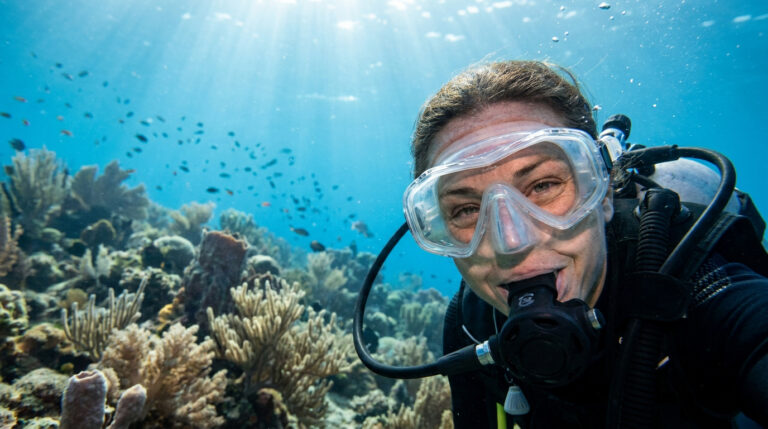
To defog a dive mask, first scrub off the factory silicone film once with toothpaste or a purpose-made cleaner, then before every dive coat the dry inside of the lens with saliva or an anti-fog solution, rub it evenly, and give it a single quick rinse in the sea. Do this and your mask stays clear from the giant stride to the safety stop.
Why does a dive mask fog up?
Fog is condensation. Your face is warm, the water is cooler, and the tiny amount of humid air trapped inside the mask cools against the glass and forms a mist of microscopic droplets. Those droplets scatter light, so the lens turns cloudy just when you want to see the reef.
There are two separate problems, and people usually confuse them:
- The factory film. A brand new mask leaves the mould with a thin layer of silicone residue on the inside of the lens. This film repels water and stops any anti-fog solution from sticking, so a new mask fogs badly no matter what you put on it. It has to be removed once.
- Everyday condensation. Even a properly prepped mask will fog if the glass is bare. A surfactant (spit or anti-fog gel) leaves an invisible layer that makes droplets spread into a flat sheet instead of beading up, which keeps the lens clear.
Fix the film once, then treat the condensation before every single dive. Miss either step and you will be flooding and clearing your mask on repeat, which is a fast way to burn air and patience on a trip out to the dive sites around Singapore.
Step one: remove the factory film (do this once)
A new mask needs a one-time deep clean before it will ever hold an anti-fog treatment. Here is the safe way to do it.
- Make sure the lens is dry.
- Put a pea-sized blob of plain white toothpaste on the inside of each lens. Use the ordinary non-gel, non-whitening kind; whitening pastes hide gritty crystals that can scratch glass.
- Rub it hard into the glass with a clean finger or a soft toothbrush, working small circles into every corner. Do not touch the silicone skirt more than you need to.
- Leave it a minute, then rinse thoroughly.
- Repeat the scrub two or three more times. New masks are stubborn, and one pass is rarely enough.
You may have heard about burning the film off with a lighter flame held against the inside of the glass. It works, but it only suits tempered glass lenses, it will melt a plastic lens instantly, and one slip scorches the skirt. Leave the flame method to experienced hands and stick with toothpaste, which cannot ruin your gear. If you would rather skip the kitchen chemistry, the Gear Aid Sea Drops Anti-Fog and Lens Cleaner (S$19) doubles as a gentle pre-clean and a daily defog.
Note on plastic lenses: soft plastic and freediving-style lenses often ship with a factory anti-fog coating that toothpaste and lighters would strip. For those, follow the maker’s instructions and never scrub abrasively.
Step two: defog before every dive
Once the film is gone, the pre-dive routine is quick. The golden rule is that the lens must be dry when you apply your defog, and you rinse only once and briefly afterwards so a thin film of surfactant stays behind.
- Start with a dry mask, out of the water.
- Apply your chosen defog to the inside of both lenses: a few drops of gel, or a good working of saliva.
- Smear it across the whole lens with a clean finger, right into the corners.
- Dip the mask once in the sea or a rinse bucket and give it a single gentle swish. Do not blast it under a running tap until it squeaks clean, or you wash the treatment straight off.
- Put the mask on and do not touch the inside of the glass again. Finger oils undo the whole thing.
These are exactly the habits our instructors drill during the pool sessions on our PADI courses, so by the time you are diving Pulau Hantu or Lazarus Island the routine is automatic.
Which defog method should you use?
Spit is free and genuinely works, but only for the first ten minutes or so of a dive before it rinses away. Commercial gels last a full dive and shrug off warm water better, which matters in the low-visibility, bath-warm conditions off Singapore. Baby shampoo is a cheap, biodegradable middle ground that many divers keep in a small squeeze bottle.
| Method | Cost | How long it lasts | Best for |
|---|---|---|---|
| Saliva (spit) | Free | 5 to 10 minutes | Backup, forgot your bottle, short dips |
| Diluted baby shampoo | Very low | Most of a dive | Budget divers, gentle on eyes when diluted |
| Commercial anti-fog gel | S$17 to S$21 | A full dive, often longer | Warm water, back-to-back dives, reliability |
| Anti-fog film insert | S$40 | Months per film | Divers who hate fussing before every dive |
There is no single right answer. Plenty of experienced divers carry a bottle of gel and fall back on spit if they run out. What matters is that you apply something to a dry, clean lens every time.
Anti-fog products we stock in Singapore
If you want a bottle that just works, these are the defog options on our shelves at 178 Paya Lebar Road, all reef-friendlier than random household chemicals and sized to live in a dive bag.
- Scubapro Scuba Clear Anti-Fog (S$17): a thin, spray-style solution that spreads fast across the lens; an easy grab-and-go bottle.
- Gear Aid Sea Drops Anti-Fog and Lens Cleaner (S$19): part cleaner, part defog, so it tidies up smudges as well as stopping fog.
- Gear Aid Sea Gold Anti-Fog Gel (S$21): a thicker gel that clings well and is a favourite for longer or deeper dives.
- Gull Anti-Fog Film (S$40): a lens film that fits specific Gull masks and holds its anti-fog effect for months, so there is nothing to apply at the water’s edge.
Any of these beats scrubbing with toothpaste before every dive, and they weigh nothing. If you are still shopping for the mask itself, browse the full range in our dive guides and gear resources before you buy.
How to keep your mask clear on the dive
Prep gets you a clear lens on the first descent. These habits keep it that way, especially in the warm, humid water we dive locally.
- Do not pre-flood on the boat. Rinsing your mask, then leaving it face-up in the sun, cooks off your treatment. Defog just before you kit up.
- Keep sunscreen and hair product off your fingers. Oils are the enemy of any surfactant. Wash your hands before you handle the lens.
- Let a little cool water in. If a mask fogs mid-dive, crack the bottom seal, let a splash of water swirl across the glass, then clear it. The cooler water knocks the mist down.
- Store it clean and dry. Rinse in fresh water after diving, dry it out of direct sun, and keep it in a box so the lens does not get scratched. Scratches trap fog you can never fully clear.
- Refresh part-way through long days. On a two or three dive day, reapply defog before each dive rather than trusting the morning coat to last.
Frequently asked questions
Does spit really work to defog a dive mask?
Yes. Saliva is a surfactant, so it flattens the droplets that make a lens look foggy. The catch is that it rinses off within roughly ten minutes, so it is best as a backup or for short dives. For a full dive in warm water, a commercial gel lasts far longer.
Can I use toothpaste before every dive?
No. Toothpaste is for the one-time job of scrubbing the factory silicone film off a new mask, and for the occasional deep clean. As a daily defog it is too abrasive and too slow. Once the film is gone, switch to spit, baby shampoo, or an anti-fog gel.
Why does my brand new mask still fog even after I use anti-fog?
Almost always because the factory silicone film is still on the lens. That film repels water and stops any anti-fog solution from bonding, so no gel will hold until you scrub the film off with toothpaste two or three times. Prep a new mask before its first dive.
Is the lighter method safe for defogging a mask?
It can work on tempered glass lenses, but it is risky. A flame will melt a plastic lens and can scorch the silicone skirt if it drifts, and a warped skirt no longer seals. We recommend the toothpaste method instead, since it removes the same film with zero risk to your gear.
Should I rinse my mask after applying anti-fog?
Only once, and only briefly. You want to leave a thin invisible layer of the surfactant on the glass. A long blast under a tap washes the treatment away and the mask fogs again. One quick dip and a gentle swish is all it needs.
Can I learn all this properly on a course?
Yes. Mask skills, including defogging, clearing, and removal, are core parts of the PADI Open Water course, which we run at a flat S$838 in small groups of four to five students, with training dives at Pulau Hantu and Lazarus Island.