
Dive Mask & Fins Guide: Fit, Prescription Options, Singapore Prices
A mask and fins are the two pieces of gear where fit decides everything. A $300 mask that leaks on your face is worse than a $65 one that seals, and fins a half-size wrong will cramp your calves by the second dive. This guide covers how to fit both properly, what the lens and blade choices actually mean, prescription options, and what we stock in Singapore with real prices.
How to fit a dive mask: the no-strap test
Flip the strap out of the way, look slightly upward, rest the mask on your face, and inhale gently through your nose. If the mask stays put on its own, with no air hissing in and no need to keep sucking, the skirt seals on your face. That is the whole test, and it is the reason we tell people to try masks on in person rather than guessing from photos.
Two refinements. First, repeat the test with a snorkel or regulator mouthpiece in place: a mouthpiece changes the shape of your cheeks and upper lip and can break a seal that worked bare-faced. Second, check the skirt rests evenly along its whole edge; the usual leak points are the temples, the cheekbones, and the upper lip (moustaches leak, there is no polite way around it).
Fit beats features, every time. Narrow your shortlist by seal and comfort first, then pick colours and lens styles from what remains.
Single lens or dual lens?
A single-lens mask gives you one uninterrupted window with no frame bar over the nose: the widest, most open view. A dual-lens (two-window) mask usually sits closer to your face with lower internal volume, which makes it easier to clear and to equalise, and it has one decisive advantage: each side takes a drop-in stock prescription lens, so different corrections per eye are cheap and off-the-shelf.
Low volume matters most for freedivers, who equalise the mask air space from lung air as pressure doubles in the first ten metres; less air space means less air spent per equalisation. That is why freediving masks like the Gull Anelia ($135), Scubapro Steel Comp ($116), and the budget AKUANA NATO2 ($38) are all compact, close-fitting designs.
Prescription dive masks in Singapore
If you dive in glasses on land, you have three routes, all of which we handle in the store:
- Our prescription mask ($145): a dedicated optical mask with a wide range of corrective lenses, cut to fit both Asian and Western faces. The simplest answer for most short-sighted divers.
- Scubapro Zoom ($83) with the Bi-Focus positive lens ($70): the route for far-sighted divers who need help reading gauges and computer screens up close.
- Optical-capable dual-lens masks like the Scubapro Flux Twin ($96) and D-Mask ($200): buy the mask now, fit stock corrective lenses when you need them.
Bring your spectacle prescription to the store and we will match it to lens availability on the spot.
Smaller faces and Asian fit
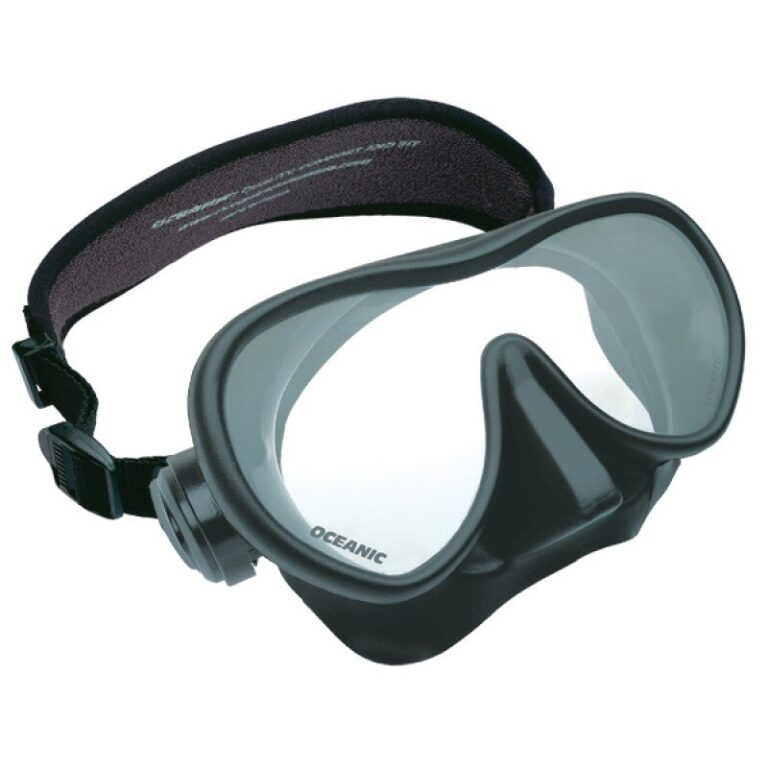
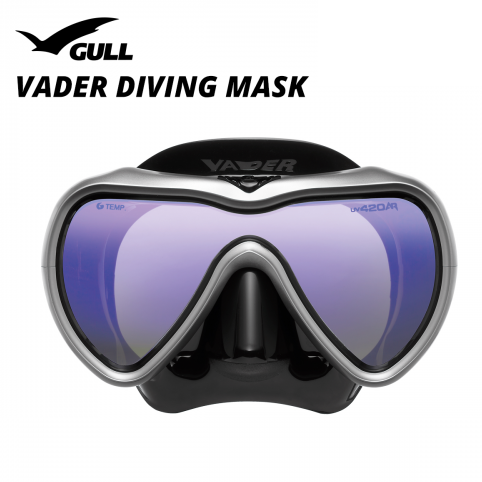
Most mask leaks on smaller or flatter face profiles come from a skirt that is simply too wide. Two answers on our shelf: the Oceanic Shadow Mini ($125), which keeps the Shadow’s liquid-silicone skirt but narrows the seal opening, and the Gull Vader Fanette (from $215), a lighter, smaller-volume version of the Vader with thinner silicone. Gull is a Japanese maker whose skirts are shaped on Asian face profiles in the first place, which is a large part of why the brand is so popular here. The matching move for snorkels is the Super Bullet Mini ($94) with its smaller mouthpiece.
Black skirt or clear skirt?
Black silicone blocks stray light entering through the skirt, which kills reflections on the inside of the lens; it is the standard pick for photographers and for bright tropical shallows, which is to say most of the diving we do here. Clear silicone lets in more peripheral light and feels less closed-in, a fair choice for newer divers who dislike tunnel vision, but it flares in bright water. Rule of thumb: black skirt in bright water, clear skirt in dark water.
New mask? De-fog it before the first dive
Factory lenses carry a thin silicone film left over from manufacturing, and the mask will fog on every dive until that film is removed. Scrub both sides of each lens with a pea-size drop of paste-type toothpaste (non-gel, non-whitening: whitening pastes carry abrasives that scratch), or use a purpose-made pre-cleaner like Gear Aid Sea Buff ($16). The lighter-flame trick works but melts skirts in inexperienced hands; if you want it burned, let a professional do it.
Pre-treatment is not defog. You still apply an anti-fog before every dive: Sea Gold gel ($21), Scubapro Scuba Clear ($17), or for Gull masks a semi-permanent anti-fog film ($40, professionally installed with showroom purchase).
Fins: open-heel or full-foot?
Full-foot fins slip on like a shoe over bare feet: lighter, cheaper, less luggage bulk, the default for warm-water boat diving and snorkelling travel. Open-heel fins are worn over dive boots with an adjustable strap: more power with heavy gear, and the boots protect your feet on hot boat decks and rocky shore entries. For the tropical boat diving most of our customers do, full-foot wins on weight; pick open-heel if shore entries or cooler-water trips are in your plans. Boots to pair: Gull GS boots ($120) or Short Mew boots ($98).

Blade types, from easy to workhorse
Paddle and channel blades are the recreational sweet spot: softer panels flex into a U on the power stroke and channel water backwards, giving more thrust per unit of effort. That is the territory of the Gull Mew ($175), the top-selling Super Mew XX (from $265), and Scubapro’s articulated-wing Seawing Nova ($195, or the stiffer Gorilla at $245). For travel, the compact Go Sport ($180).
Jet-style fins are short, very stiff vented rubber blades: negatively buoyant, so they hold your leg trim down, and superb for frog kick, back kick, and helicopter turns. That is why wreck, cave, and tech divers swear by them, and why they punish your legs on long flutter-kick swims. The originals are the Scubapro Jet Fins (from $230), produced since 1965. The modern take is the Apeks RK3 ($330, designed alongside the US military, spring straps included), its stiffer sibling the RK3 HD ($330), and the compact wide-blade RK4 ($430). Gull’s GT ($655) delivers jet-style torque in a closed-heel Japanese build.
Freediving long blades are their own family: hand-laminated epoxy and fibreglass Leaderfins bi-fins ($395 across ten designs) with Forza foot pockets ($105) sold separately.
The general rule across all of them: stiffer blade means more thrust per stroke but more leg fatigue and cramp risk; softer blade means an easier cadence with less top-end power in current.
Fin sizing that actually works
- Full-foot: size off your shoe size, snug like an athletic sneaker. Toes just touching the front without curling, heel held with no slip when you kick in air, no pinching at the arch.
- Open-heel: always try them on wearing the boots you will dive in; the neoprene typically pushes you up one size from your shoe size.
Add-ons that save trips: Gull fin socks ($48) against foot-pocket rub, spring straps ($115) to retire fiddly rubber buckles, and exact replacement straps ($18) when one snaps the night before a trip.
Frequently asked questions
What size Apeks RK3 should I get?
RK3s are sized to be worn over dive boots, so bring your boots to the store and we will fit them properly, or WhatsApp us your boot size and model. When you are between sizes on a jet-style fin, the boot decides, not your shoe size.
How heavy are jet-style fins like the RK3?
Heavy, deliberately: vented rubber fins in this class run around 1.5 kg per fin. The negative buoyancy holds your legs in trim underwater, but it is real weight in your luggage; travel divers who flutter-kick all dive are often happier in a lighter channel-blade fin.
Do you stock full face snorkel masks?
No. They cannot be used for scuba, and for snorkelling we recommend a standard mask and snorkel: easier to clear, easier to fit properly, and the same mask then serves you through a dive course.
How do I stop my mask fogging?
New mask: scrub off the factory silicone film first (toothpaste or Sea Buff), or it will fog no matter what you do. Every dive after: a drop of anti-fog gel or spray on the inside of the lens, rinsed briefly before you put it on.
Which side does the snorkel go on?
Left. Your regulator hose comes over the right shoulder, and snorkel mouthpieces are angled for left-side wear. Angle the tube so it points straight up when your face is down in the water.
What is the best dive mask for an Asian face?
The one that passes the no-strap test on your face; but start your shortlist with Gull (Japanese-designed skirts), the Oceanic Shadow Mini, and the Gull Vader Fanette, all shaped for narrower or flatter profiles. Try-ons in the store take minutes.
Can I get prescription lenses in a dive mask in Singapore?
Yes: our dedicated prescription mask is $145 with a wide corrective range, and dual-lens masks like the Scubapro Zoom and Flux Twin accept drop-in optical lenses per eye. Bring your prescription to the store.
Browse the full range with live stock: diving masks, fins, and snorkels. Building a full kit? Our regulator guide and dive computer guide cover the rest, or come try everything on at 178 Paya Lebar Road.