
Underwater Camera Guide Singapore: Housings, Trays & Lights
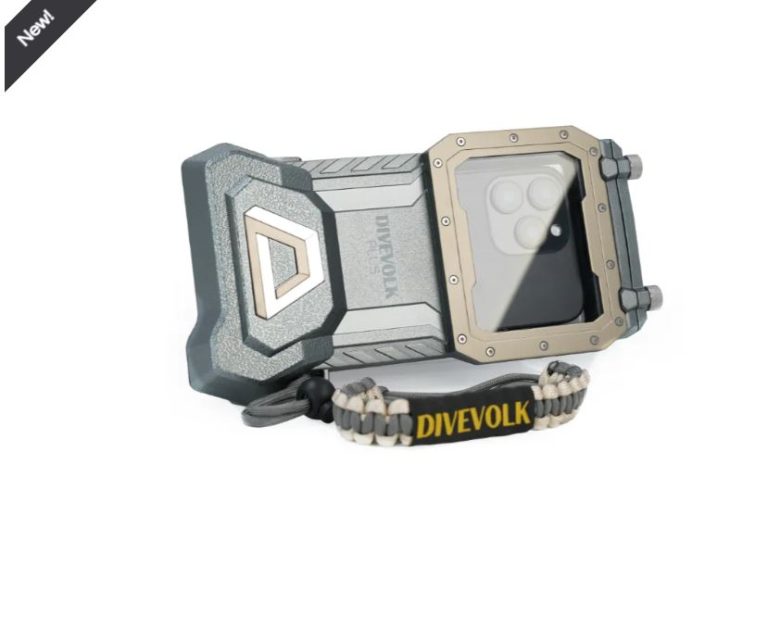
The best underwater camera for most Singapore divers is the phone already in your pocket, sealed inside a touchscreen dive housing: the Divevolk SeaTouch 4 MAX Plus we stock is rated to 60 metres and currently $345 (down from $370). Add a dual-handle camera tray from $105 and a video light, and you have a rig that holds its colour at depth and posts straight to Instagram on the boat ride home. This guide covers the three routes into underwater photography (phone housing, action cam, rugged compact), what a camera tray actually does, why everything turns blue below 5 metres, and every price from our shelf at 178 Paya Lebar Road.
Which diving camera should you buy: phone housing, action cam, or compact?
The consensus across the underwater photography press is refreshingly clear. A smartphone in a housing gives beginners the best balance of image quality, convenience, and cost; a GoPro-style action cam wins for video-first divers; a rugged compact like the Olympus TG series wins for macro and room to grow. Here is how the three stack up from our counter.
Phone in a housing: the default answer
Your phone already has large sensors, multiple lenses, computational photography, and RAW capture, plus an interface you have used every day for years. Put it in a housing and you keep all of that underwater, then edit and share the moment you surface. The SeaTouch 4 MAX Plus ($345 on sale) is the one we recommend: Divevolk calls it the world’s first full touchscreen diving housing, and the membrane really does let you pinch, swipe, and run the native camera app at depth, all the way to its 60 metre rating. Adapters for iPhone 14 through 16 are included; a custom adapter for other smartphones is $30 (rare models take about two weeks to arrive).
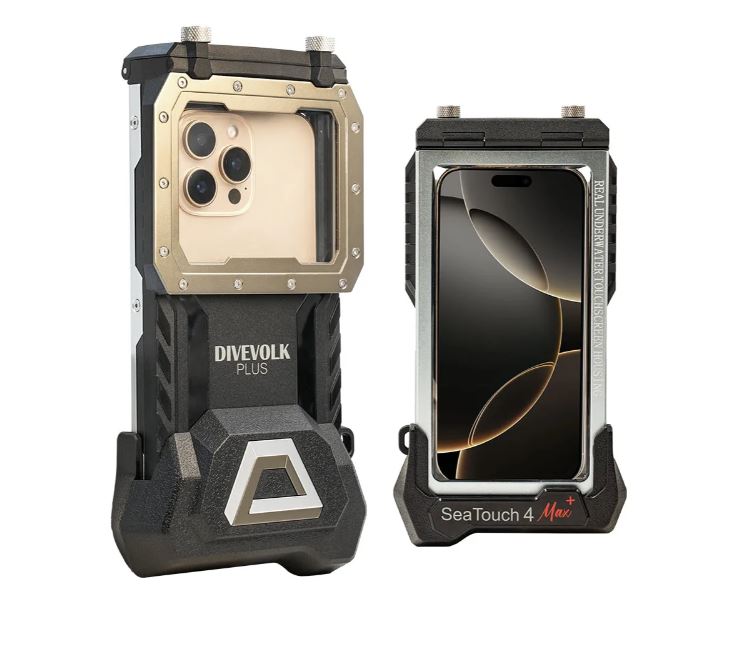
The honest tradeoff: if a phone housing floods, it is your phone at risk, not just a camera. Treat the housing well. A protective bag ($28) or EVA hard box ($55) protects the touch membrane in your dive bag, and the glass protective film set ($15) keeps the front element scratch-free. A touchscreen finger cot ($30) makes the screen easier to use underwater.
Action cams: video first, stills second
Current action cams are waterproof to recreational depths without a housing, stabilise footage superbly, and excel at wide-angle point-of-view video. Their weaknesses are equally consistent: stills quality, little zoom or manual control, and blue-green footage at depth unless you add filters or lights. If you want your action cam in a proper housing, the AOI universal action cam housing ($170) takes GoPro HERO9 through 13, DJI Osmo Action 4/5/6, and Insta360 Ace Pro and Ace Pro 2, with model-specific adapters at $35 each: GoPro Hero13, Osmo Action 5, Osmo Action 6, and Insta360 Ace Pro 2.
Rugged compacts: the macro specialists
TG-style compacts shoot strong macro, capture RAW, survive abuse, and handle white balance well underwater; they cost more than a GoPro and need an added wet lens for wide-angle work. We do not stock the cameras themselves, but if you already own a compact, mirrorless, or DSLR with Wi-Fi, the Divevolk SeaLink Wi-Fi transmitter ($235) links it to a phone in a SeaTouch housing, so the big bright phone screen becomes your underwater monitor and remote.
What does a camera tray actually do?
A camera tray bolts under your housing and adds a handle on each side, and it is the single most underrated upgrade in underwater photography. Holding a rig with two hands minimises the wobble and shake that come with a one-handed grip, which shows up immediately as steadier video and sharper stills. Just as important, the handle tops are mounting points: they accept ball mounts and arms, so lights sit away from the lens where they reduce backscatter and shadowing instead of illuminating every particle in front of the port.

We stock two dual-handle trays, both with EVA-coated grips, dual quarter-inch mounting screws, and aluminium ball heads:
- Dual Handle Tray for the SeaTouch 4 Max ($140): sized for the current MAX Plus housing.
- Dual Handle Tray for SeaTouch housings ($105): the DHDB model, built for the other SeaTouch housings.
One part people miss: mounting the SeaTouch 4 Max on a tray requires the expansion clamp with lens adapter ($115). It is the anodised aluminium bridge between housing and tray, and it doubles as the 67mm mount for wet lenses and filters, with a cold shoe slot on top. If you want reach rather than stability, the Divevolk selfie stick ($65) extends to three lengths, and the flexible underwater tripod ($95) parks the rig on the sand for timelapses (it needs the housing clamp to attach).
Why does everything look blue below 5 metres?
Water eats light from the red end of the spectrum first. Red light can lose about 40 percent of its intensity in the first metre of coastal water, and by around 5 metres depth it is largely gone; orange and yellow follow. The path length counts both ways, too: a subject 3 metres away from you at 3 metres depth has roughly 6 metres of red-stripping water between the sun and your lens. That is why your reef photos come back looking like they were shot through blue cellophane.
Artificial light puts the colour back. The Divevolk SL50 video light ($530) is our lighting pick: a movie-grade COB LED pushing 5,000 lumens through a 120 degree beam, in a body just 135mm long that pairs naturally with a phone rig, GoPro, or compact. It runs at 100, 75, or 50 percent with stepless dimming, and works as a focus light for stills. Mount it on a tray handle, hold it off to the side, and your video keeps its reds at depth.

Video light or strobe? The practical rule from the pros: video-first shooters buy video lights (strobes cannot light video because they are not continuous), while photo-first shooters buy strobes, whose roughly 1/1000 second burst freezes motion with far more power than any constant light. A video light also lets you see true colours and preview your exposure before you shoot, which makes it the natural first light for a phone or action cam rig.
Red filter or video light: which do you need?
A red filter rebalances colour by cutting blue and green, and it costs a tenth of a light: our 67mm red filter is $35, rated by Divevolk for 5 to 25 metres, and the magenta filter ($35) covers 5 to 15 metres. Both screw onto the 67mm lens adapter ($30) or the expansion clamp.
Know the limits before you choose. Filters are designed for blue tropical water and do their best work at roughly 10 to 15 metres: too strong shallower, and below about 15 to 20 metres they become actively harmful, because the red light they are meant to rebalance is already gone, so the filter only removes what light remains and darkens the image. And never stack a red filter with a video light on close subjects; the filter tints anything your light touches red, so take it off when the light is doing the work. Deep and dark means light; shallow, sunny, and blue means filter.
How much does an underwater camera setup cost in Singapore?
Our camera wall runs 27 products from $15 to $530, built around Divevolk phone housings and AOI action cam hardware. Three honest builds from the shelf:
| Build | What is in it | Total |
|---|---|---|
| Starter | SeaTouch 4 MAX Plus housing ($345), glass protective film ($15), protective bag ($28) | $388 |
| Steady video | Starter build plus expansion clamp ($115), Dual Handle Tray 4 Max ($140), SL50 video light ($530) | $1,173 |
| Shallow reef on a budget | Housing ($345), 67mm lens adapter ($30), red filter ($35) | $410 |
From there the wet lens shelf expands the rig one thread at a time: the wide-angle conversion lens ($160, a 0.6x converter that lets phone or action cam get up to 4 times closer to the subject), the +8 close-up macro lens ($175, changeable underwater), and the dome lens ($190) that pushes the waterline away from the phone lens for half-above, half-below split shots. Everything ships with flat $8 tracked delivery in Singapore, and most of it fits in a pocket of your dive bag for the next Tioman weekend.
Frequently asked questions
Do I need a tray for my GoPro?
For handheld wide-angle video, not urgently: current action cams stabilise footage very well on their own. The tray earns its place the moment you add a video light, because the handle tops are where lights mount, positioned away from the lens to cut backscatter. Two-handed grips also steady stills, which is where action cams are weakest. Our stocked dual-handle trays ($105 and $140) are built around the Divevolk SeaTouch housings; message us on WhatsApp at 9800 0539 to check fit for your rig before you buy.
Can I use my phone underwater for diving?
Yes, inside a proper dive housing. The SeaTouch 4 MAX Plus ($345) is rated to 60 metres and keeps the full touchscreen usable through a membrane, so you shoot with the native camera app. The tradeoff to respect: a flood risks the phone itself, so rinse, check the seal, and transport it protected.
What is the best dive camera for a beginner?
A smartphone in a housing, on the consensus of the underwater photography press: best balance of image quality, convenience, and cost, with no new interface to learn. Choose a GoPro-style action cam instead if video is the whole point, or a rugged compact if macro photography and manual growth matter to you.
Do red filters work below 20 metres?
No. Red light is essentially gone from sunlight by that depth, so a red filter has nothing to rebalance and only removes remaining light, darkening the image. Filters shine at roughly 10 to 15 metres in blue water; deeper than that, the answer is a video light.
Do you stock strobes?
Not currently; our lighting stock is the SL50 video light ($530), which suits the phone and action cam rigs we sell. Strobes remain the better tool for still photography (motion-freezing burst, far more power), so if you are building a stills-first rig around a compact or mirrorless, talk to us at the shop and we will point you the right way.
Will the SeaTouch housing fit my Android phone?
Adapters for iPhone 14 through 16 come in the box; for other smartphones we order a custom adapter ($30), and rare models take about two weeks. Bring your phone to the shop and we will confirm the fit before you commit.
What about a camera setup for snorkelling?
The same phone housing works from the surface down, and the dome lens ($190) is the snorkeller’s favourite: it pushes the waterline off the lens for split shots that are half sky, half reef. For the rest of the surface kit, see our snorkelling gear guide.
Browse the full range with live stock at our underwater camera category, and if you are still assembling the basics, the mask and fins guide covers the kit that goes on before the camera does. Better yet, bring your phone to 178 Paya Lebar Road, #03-03: we will fit it to a housing, put a tray in your hands, and show you the difference a light makes before you spend a dollar.