
Drysuit Guide: When Singapore Divers Need One, with Prices
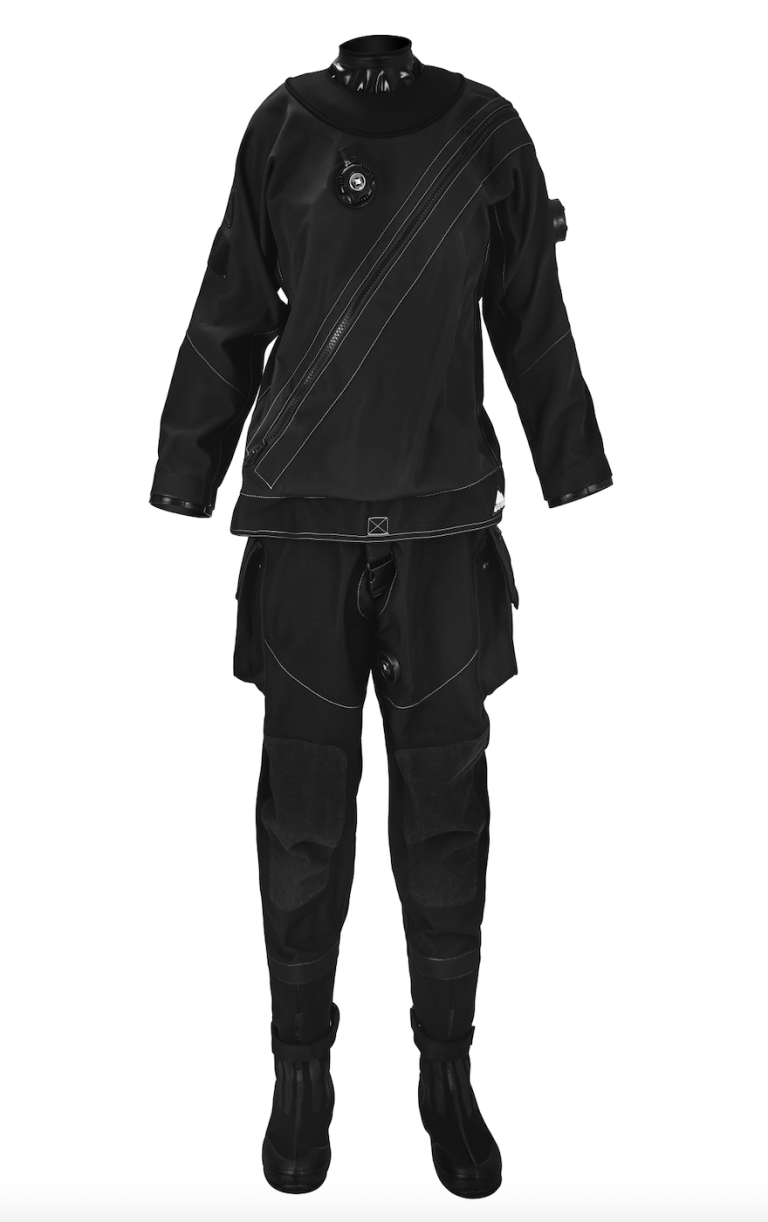
A drysuit keeps water out entirely: you dive dry, and the warmth comes from air trapped in insulating undergarments worn underneath, not from a layer of water warmed against your skin the way a wetsuit works. If you dive from Singapore in the 27-30°C water of Southeast Asia, the short honest answer is that you do not need one; a dry suit starts earning its price when water drops below roughly 15-16°C, on long deco profiles, and on trips to temperate destinations like Japan or southern Australia.
We stock three AKUANA drysuits at $2,280 to $2,680, so we would love to tell you every diver needs one. Most of our customers do not. This guide covers when a tropics-based diver genuinely does, how a drysuit works, membrane versus neoprene, seals and valves, what to wear underneath, and exact prices from our shelf. For everything you can dive wet, which around here is almost everything, the wetsuit guide already covers it; we will not repeat it.
How does a dry suit actually work?
The suit seals at the neck and wrists and closes with a waterproof zip, so no water reaches you. Insulation comes mainly from what you wear under it: synthetic fleece undergarments such as Polartec or Thinsulate, chosen and layered to match the water temperature. The air those layers trap is the actual insulator.
That trapped air is also why a drysuit has valves. Gas inside the suit compresses as you descend, so you add gas through a chest-mounted inflator valve fed by a low-pressure hose from your regulator first stage to counter the squeeze, then vent expanding gas on ascent through an exhaust valve, typically on the upper left shoulder. If “low-pressure hose” and “first stage” are new words, the regulator guide explains the plumbing. Managing this second air bubble alongside your BCD is the core new skill of drysuit diving, and the reason training comes before the suit.
Do you need a drysuit for diving from Singapore?
Not for local or regional diving. Tioman, and the rest of Southeast Asia with it, sits in warm tropical water where a wetsuit, or often just a rash guard, does the whole job. Where the lines actually fall:
| Water temperature | What handles it |
|---|---|
| 27-30°C (Singapore and Southeast Asia) | Rash guard to thin wetsuit; see the wetsuit guide |
| 15-18°C (transition zone) | Thick 7mm wetsuit with hood and gloves, or a drysuit; comfort and dive length decide |
| Below roughly 15-16°C | Drysuit territory |
Temperature is not the whole story. Dive duration, repetitive dives, low-exertion or stationary diving, personal cold tolerance, and surface conditions between dives all push the decision; long or repetitive deep and deco exposures push toward dry even in milder water. Hanging still at 6 metres for forty minutes of deco chills you in water that felt fine while you were finning. So the divers who buy diving dry suits from us fall into two honest groups: technical divers running long decompression profiles, and travellers booked for temperate destinations such as southern Australia, Japan, Europe, or cold-water wrecks. If that is not you yet, keep your money in wetsuit territory.
Membrane or neoprene: which type of drysuit?
Two construction families, two different logics.
- Membrane (trilaminate): three laminated layers, typically nylon, butyl rubber, nylon. Lightweight, flexible, fast-drying and travel-friendly, but the shell itself provides essentially no insulation; the undergarments do all the thermal work, which means one suit adapts to many temperatures just by changing layers.
- Neoprene: a foam neoprene shell that insulates by itself in proportion to its thickness, like a wetsuit, and retains insulation and buoyancy even if flooded. The trade is bulk and slower drying.
For a diver flying out of Changi with airline baggage limits to respect, membrane construction is usually the sensible pick, and it is the approach our range leans on: the AKUANA Arctic Tern uses a polyester trilaminate shell for flexibility and durability.
Seals, zips and valves: the fittings that matter
Seals keep the water out at your neck and wrists, and the material is a genuine choice. Latex stretches up to about 400 percent and seals better, but has a shorter lifespan and needs careful handling. Neoprene seals are warmer at the neck and wrists and more durable, but slightly less watertight. Neither is wrong; cold-water divers often prefer neoprene at the neck for warmth alone.
Zips do the waterproofing for the whole suit and are a wear item, so look at them closely. The AKUANA Matrix runs a diagonal YKK aqua seal zipper with a quick-exchange system, which turns an eventual zip replacement from surgery into a swap.
Valves are the inflator and exhaust described above, and deep divers add one more piece of plumbing: a dedicated inflation bottle setup. The AKUANA drysuit inflation package ($392) gives you independent suit inflation from its own compact piston first stage with an overpressure valve, which avoids pushing helium from your back gas into the suit on deep dives; the hose mounts to your backplate.
What do you wear under a drysuit?
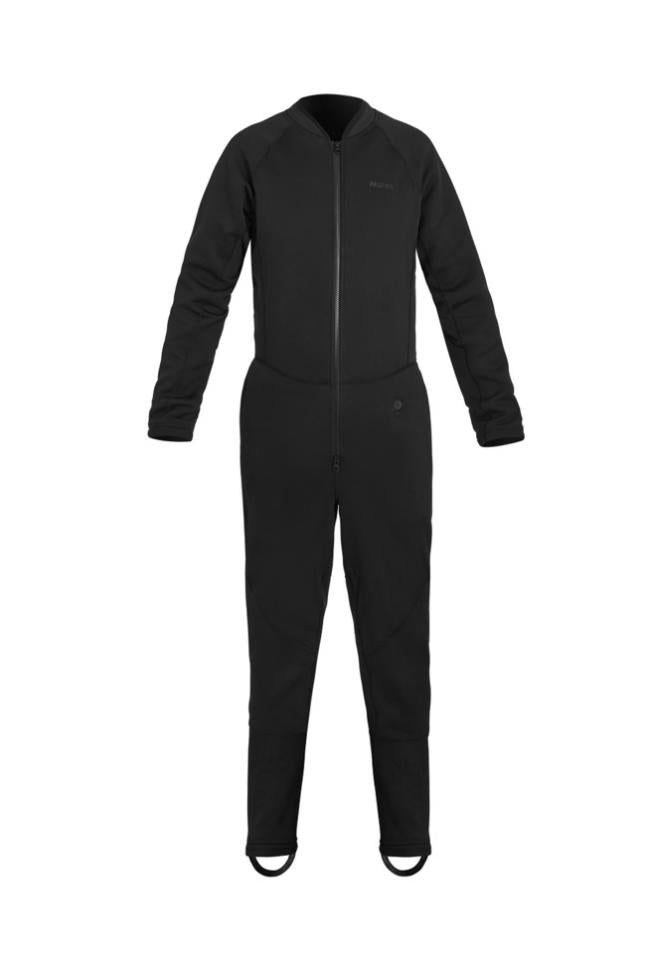
The undergarment does the actual insulating, so budget for it the way you budget for the suit. Our core layer is the Koala 300 undergarment ($282): a one-piece suit of stretchy, breathable, compression-resistant fleece that keeps its insulating value as depth changes, with routing built in for the pee valve hose and heating vest hose.
For genuinely cold water, or long deco hangs, active heating goes under the suit too. The AKUANA Opah drysuit heating vest ($775) runs on high-energy NCM lithium batteries in an external-battery configuration with dedicated drysuit passthrough components; the battery sits outside the suit, never inside it, which resolves the safety and comfort problems of carrying a battery against your body. Its sibling, the Opah X heating vest ($680), is the wetsuit-oriented base layer of the same range, warming the water layer between body and wetsuit.
Lighter base layers work under either suit type: the Bare ExoWear range (front zip jacket $205, long sleeve top $155, pants $165) is neutrally buoyant and made to be worn under a wetsuit or drysuit, and the Mares Ultraskin long-sleeved tops (men’s and ladies, $180 each) add a three-layer thermal step without bulk.
AKUANA drysuit prices in Singapore
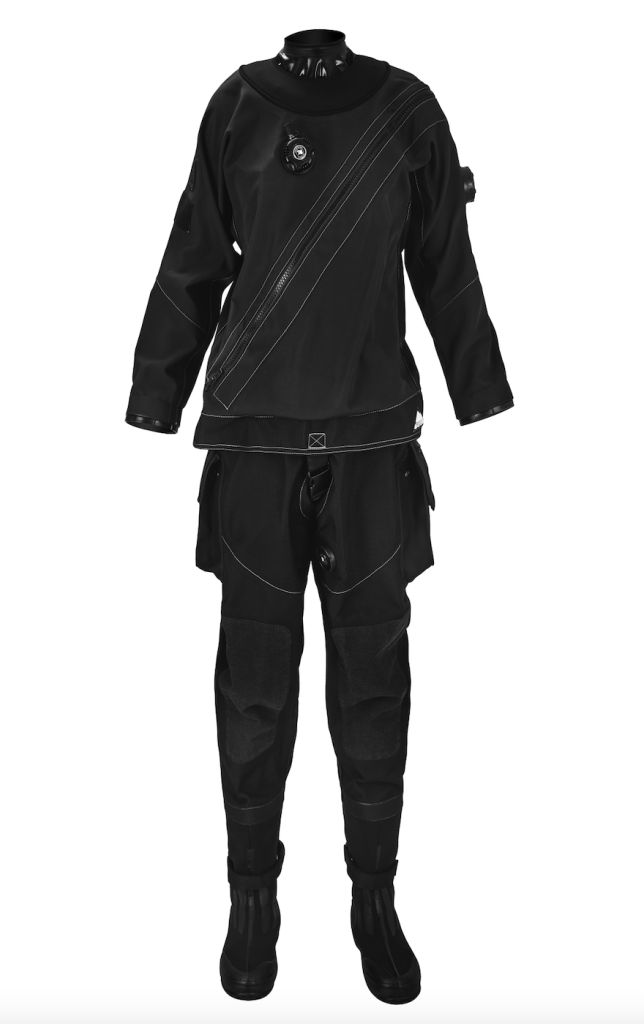
We carry the AKUANA drysuit line, three models deep:
| Suit | Price | The short version |
|---|---|---|
| Arctic Tern | $2,280 | The first model in the AKUANA drysuit series and the first drysuit choice of many divers since 2010; polyester trilaminate shell for flexibility and durability |
| Matrix | $2,450 | The proven classic of the range, reliable over the past 10 years; diagonal YKK aqua seal zipper, quick-exchange system, customised sizing available |
| Pangong | $2,680 | Named after the exploration dive in Pangong Lake at 4,200m altitude; two ultra-durable materials resist punctures and tearing while staying stretchy, for a streamlined fit |
One thing to plan around: AKUANA drysuits are custom-made and take 45 days to produce. If you have a cold-water trip or a tech course on the calendar, order well ahead; a drysuit that arrives after the boat leaves keeps nobody warm. Sizing is exactly the conversation to have in person at the shop, or over WhatsApp at 9800 0539.
Do you need training for dry suit diving?
Yes. A drysuit needs training or a supervised orientation before use, because you are now managing buoyancy in two places at once. The PADI Dry Suit Diver specialty is the standard route: open to (Junior) Open Water Divers aged 10 and up, it runs knowledge development plus one confined water session and two open water dives. If you are working through the PADI Advanced Open Water course, the Dry Suit Adventure Dive is one of the electives, and it credits toward the full specialty; a tidy way to try drysuit diving inside a course you were taking anyway.
How do you look after a drysuit?
A drysuit is the biggest exposure-protection ticket you will ever buy, and care is what decides how long it lasts:
- Rinse with fresh water after diving, keeping the zipper closed, and flush salt and grit out of the inflator and exhaust valves.
- Lubricate a brass zipper lightly with drysuit zipper wax on the outer teeth.
- Dust latex seals with unscented talc or pure cornstarch after rinsing so they do not stick to themselves, and keep seals away from oils and sunlight.
- Dry the suit completely before storage to prevent mould.
- Store loosely, away from heat and UV; roll a neoprene suit rather than folding it.
Frequently asked questions
How much does a drysuit cost in Singapore?
From our shelf: AKUANA Arctic Tern $2,280, Matrix $2,450, Pangong $2,680. Budget for the system, not just the shell: a Koala 300 undergarment is $282, an independent inflation package $392, and an Opah heating vest $680 to $775.
What is the difference between a drysuit and a wetsuit?
A wetsuit lets water in and warms a thin layer of it against your skin; a drysuit seals water out completely and insulates you with the air trapped in undergarments worn underneath. For the water temperatures Singapore divers actually meet in the region, a wetsuit is the right tool; our wetsuit guide covers those choices in full.
At what water temperature do you need a dry suit?
The common threshold is below roughly 15-16°C. The 15-18°C band is a transition zone where a thick 7mm wetsuit with hood and gloves overlaps with a drysuit, and dive length, repetitive dives, and your own cold tolerance decide. Long deco exposures push toward dry even in milder water.
Is a drysuit worth it for diving in Southeast Asia?
Honestly, no. Regional water runs 27-30°C, and a drysuit adds cost, bulk, and a new buoyancy skill for warmth you do not need. Buy one when temperate trips, cold-water wrecks, or long technical profiles enter your diving, not before.
What do you wear under a drysuit?
Synthetic fleece undergarments such as Polartec or Thinsulate, layered to match the water temperature; the trapped air in those layers is the real insulation. Our stocked option is the one-piece Koala 300 ($282), with the Opah drysuit heating vest ($775) underneath for genuinely cold or long dives.
Do I need a certification to dive a drysuit?
You need training or a supervised orientation before using one. The PADI Dry Suit Diver specialty covers it with knowledge development, one confined water session and two open water dives; the Dry Suit Adventure Dive within Advanced Open Water credits toward it.
How long does an AKUANA drysuit take to arrive?
AKUANA drysuits are custom-made and require 45 days for production, with customised sizing available on the Matrix. Order at least two months before a cold-water trip, and come in for measurements early.
If a temperate trip or a tech course has put a drysuit on your list, start with the AKUANA range or browse all diving suits online, with flat $8 tracked delivery in Singapore. Better still, come and get measured at 178 Paya Lebar Road, #03-03: sizing a custom suit, matching undergarments to your destination, and honest advice on whether you need one at all are exactly what a physical shop is for.