
Do You Need a Licence to Scuba Dive in Singapore?
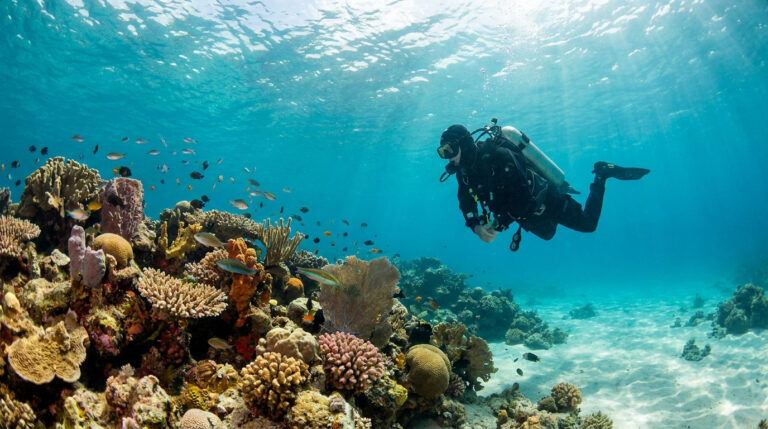
Short answer: no. There is no government scuba diving licence in Singapore, and you do not sit a state exam or apply to any authority to breathe underwater. What you actually need is a recognised diver certification, and the standard entry-level one is the PADI Open Water Diver rating. Once you hold it, you can hire tanks, book boats, and dive with a buddy anywhere in the world without further approval. Until you hold it, you can still try diving under direct professional supervision, but you cannot dive independently.
Licence or certification: what people really mean
Most people who ask about a “scuba diving licence” are picturing something like a driving licence issued by the government. That is not how diving works. There is no Singapore statute that licenses recreational divers, and no local agency that tests or registers you. Instead, the dive industry regulates itself through training organisations, and the one most shops here teach is PADI (the Professional Association of Diving Instructors).
When you finish a course, the organisation issues a certification card, often called a “C-card”. It is proof that a qualified instructor watched you demonstrate the skills and knowledge for that level. Dive centres, boat operators, and gear rental shops ask to see this card before they let you dive or fill a tank. So in everyday use, the C-card is your “licence”, even though nobody in officialdom calls it that.
- Licence: a legal permit from a government. Diving does not use one.
- Certification: proof of training from a recognised agency. This is what you need.
- C-card: the physical or digital card that shows your certification level.
The practical upshot is simple. If you plan to dive on your own trips, rent equipment, or join a local boat, get certified. If you just want to sample diving once, you have an option that skips certification entirely, covered next.
When you can dive without any certification
You can go underwater on air without a certification through a supervised try-dive, known in the PADI system as Discover Scuba Diving. An instructor teaches you a few basic skills in shallow water, stays with you the whole time, and takes you on a guided dive to a shallow limit, typically no deeper than 12 metres. It is designed for complete beginners from age 10 and does not require you to swim laps first.
The catch is that a try-dive is not a qualification. It expires the moment you climb out of the water. You cannot use it to rent gear, dive without a professional at your side, or book yourself onto a normal fun-dive boat. Think of it as a taste rather than a credential. Many people do a try-dive, enjoy it, and then sign up for the full course. If that sounds like you, browse the full range of diving courses in Singapore to see where a try-dive can lead.
What the PADI Open Water course actually gives you
The PADI Open Water course is the certification that turns you from a passenger into a certified diver. It is the qualification that matters, and it is recognised internationally and valid for life. There is no renewal fee and no expiry date printed on the card, although a refresher is wise if you have been out of the water for six to twelve months.
The course has three parts:
- Knowledge development: the theory of pressure, air, equipment, and safe dive planning, usually studied online before you arrive.
- Confined water: practising core skills such as mask clearing and buoyancy in a pool or shallow, calm water.
- Open water dives: four training dives in the sea where you show you can apply those skills for real.
Once certified as an Open Water Diver, you can dive with a buddy to a recommended maximum of 18 metres, plan your own dives within your training and experience, and rent equipment worldwide. When you are ready to go deeper or add night and wreck skills, the PADI Advanced Open Water course extends your limit toward 30 metres, and the PADI Rescue Diver course teaches you to prevent and manage problems for yourself and others.
Requirements to get certified in Singapore
Certification is open to almost anyone in reasonable health. You do not need to be an athlete, but you do need to be comfortable in water and medically fit to dive. Here is what an entry-level course asks of you.
- Minimum age: 10 years old. Divers aged 10 to 14 earn a Junior rating with depth limits and adult supervision rules, and they upgrade to the full rating at 15.
- Swimming ability: swim 200 metres non-stop with no aids (or 300 metres in mask, fins, and snorkel), and float or tread water for 10 minutes.
- Medical fitness: complete a short medical questionnaire. If any condition applies, a doctor signs a form confirming you are fit to dive.
- Time: set aside a few days for theory, confined water, and the open water dives.
Depth and supervision rules scale with age. The table below sums up the main age bands so families can plan together.
| Diver age | Rating | Depth guideline | Supervision |
|---|---|---|---|
| 10 to 11 | Junior Open Water | Up to 12 metres | With a PADI Pro or certified parent or guardian |
| 12 to 14 | Junior Open Water | Up to 18 metres | With a certified adult |
| 15 and above | Open Water | Up to 18 metres | With a certified buddy |
Certification levels compared
It helps to see the try-dive and the main certifications side by side, so you know exactly what each one lets you do. The three certification courses at our shop are all priced at a flat S$838.
| Option | Certifies you? | Depth guideline | Best for |
|---|---|---|---|
| Discover Scuba Diving | No | Up to 12 metres, supervised | First-timers testing the water |
| Open Water Diver | Yes, for life | Up to 18 metres | Anyone who wants to dive independently |
| Advanced Open Water | Yes, for life | Up to 30 metres | Certified divers going deeper |
| Rescue Diver | Yes, for life | Depends on prior rating | Divers building safety and confidence |
Notice that only the last three give you a lasting credential. The try-dive is a one-off experience, while each course is a card you keep for the rest of your life.
How you actually get certified here
Getting your first certification in Singapore is more convenient than most beginners expect. You do the theory online in your own time, practise skills in calm water, then complete your four open water training dives at local sites such as Pulau Hantu and Lazarus Island rather than flying abroad. That keeps costs down and lets you certify over a series of weekends close to home.
We keep classes small, usually four to five students, so you get real instructor attention rather than being one face in a crowd. Our shop is at 178 Paya Lebar Road #03-03, Singapore 409030, which is a straightforward stop for equipment fitting and briefings before a trip. If you want to see where your new certification can take you afterwards, read our guide on where to dive from Singapore, and browse our wider dive guides for planning tips.
The bottom line: you never need a government licence to scuba dive in Singapore, but you do need a certification if you want to dive for yourself. The Open Water course is the credential that unlocks the rest of the underwater world, and it stays valid for the rest of your life.
Frequently asked questions
Is a scuba diving licence a legal document in Singapore?
No. There is no government scuba diving licence in Singapore. What dive centres and boat operators ask for is a recognised certification card from a training agency such as PADI. That card proves you completed a course, and it is what people loosely call a “licence”.
Can I scuba dive in Singapore without being certified?
Yes, but only through a supervised try-dive such as Discover Scuba Diving. An instructor stays with you and keeps you shallow, usually no deeper than 12 metres. You cannot rent gear or dive independently without completing a certification course like Open Water.
Does a PADI certification expire?
No. A recreational diver certification does not expire and is valid for life, with no renewal fee. If you have not dived for six to twelve months, a refresher session is recommended for safety, but it is not a legal or administrative requirement.
How old do you have to be to get certified?
The minimum age is 10. Divers aged 10 to 14 earn a Junior rating with shallower depth limits and supervision rules, then upgrade to the full Open Water rating once they turn 15.
Is a certification earned in Singapore valid overseas?
Yes. A PADI certification is recognised internationally, so a card earned in Singapore lets you dive, rent equipment, and join boats anywhere in the world, subject to each site’s own conditions and local rules.