
Scuba Refresher and ReActivate in Singapore
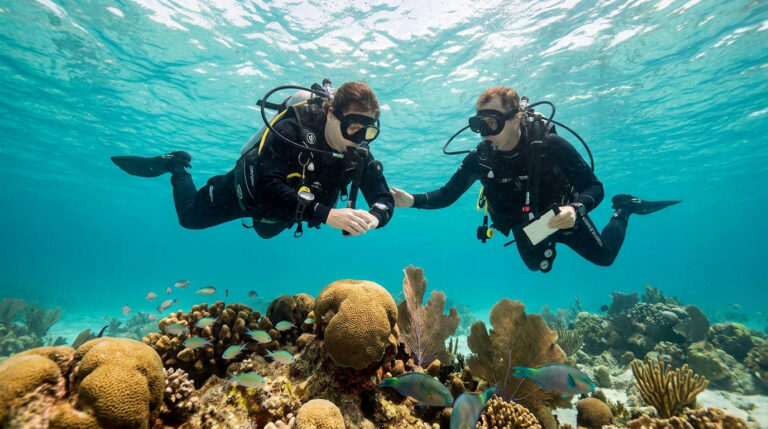
A scuba refresher (often run as the PADI ReActivate programme, and sometimes called a Scuba Review) is a short, personalised session that rebuilds your core safety skills and confidence after time out of the water. If you have not dived in the last six to twelve months, a refresher in Singapore lets you revisit the theory online and then practise the important skills in calm, familiar conditions before your next trip. At divesingapore.sg we run small, unhurried refresher sessions from our Paya Lebar base, with local training dives at sheltered sites so you step back onto a boat feeling ready rather than rusty.
Do you actually need a scuba refresher?
Diving skills are perishable. Buoyancy control, breathing rhythm and the muscle memory for clearing a mask all fade faster than most people expect once you stop diving regularly. Industry guidance is consistent on this point: PADI suggests a refresher for anyone who has not been diving in the past six to twelve months, and most instructors treat a gap of one to two years as a clear reason to refresh before heading to depth.
You will probably benefit from a refresher if any of the following sound familiar:
- Your last dive was more than six months ago, or you genuinely cannot remember when it was.
- You feel unsure about assembling your kit or setting up a dive computer.
- You had a stressful moment on a previous dive and want to rebuild trust in the basics.
- You are certified but have only ever dived on holiday with a lot of guiding and hand-holding.
- You have a trip booked and want to spend the first day enjoying the reef rather than fumbling through skills.
There is no shame in a refresher. Even active divers use them after a long dry spell, and a confident buddy is a safer buddy for everyone on the boat.
How the PADI ReActivate refresher works
ReActivate is built to be prescriptive, which means you only spend time on the areas where your knowledge and skills have genuinely faded. It has two parts, and you can do the theory before you ever get wet.
- Online knowledge review. The ReActivate eLearning runs across more than 20 short sections on your phone, tablet or computer. You watch skill videos and work through realistic dive scenarios covering safe diving practices, dive planning, problem management, breathing compressed gas at depth, kit assembly, ascents and descents, dive computer use and mask skills.
- In-water session with a PADI professional. Once the theory is done, you join an instructor to run through the essential safety skills, then spend extra time on anything you specifically want to recap. Because our classes are small (usually four to five people), you are never rushed through the parts that matter to you.
- Back to real diving. With the theory refreshed and the skills rehearsed, you finish ready for a fun dive at a local site or a smooth start to an overseas trip.
If you would rather build from the refresher into a full qualification, the same instructors run our PADI diving courses in Singapore, so it is easy to carry on into an Advanced or Rescue course later.
Refresher, ReActivate or re-taking a course?
Divers often ask whether they need a quick refresher, the formal ReActivate programme, or a full re-certification. In almost every case a refresher or ReActivate is enough; you do not lose your certification, so you rarely need to sit the whole course again. The table below shows the practical differences.
| Option | Best for | What it involves | Typical time |
|---|---|---|---|
| Informal refresher | Gaps of around 6 to 12 months | A skills recap in confined water, no formal record | Half a day |
| PADI ReActivate | Gaps of 12 months or more, or divers who want a record | Online eLearning plus an in-water session, updates your card | One session plus self-paced theory |
| Re-taking the full course | Very long breaks, or if you never felt confident when certified | The complete PADI Open Water course again | Three to four days |
Not sure which one fits you? Tell us your last dive date and your comfort level, and we will point you to the lightest option that gets you safely back in the water.
What we practise in the water
The in-water part of a Singapore refresher is deliberately calm and confidence-first. We start in a controlled, shallow environment before moving to open water, and we prioritise the skills people most often lose. Expect to run through:
- Buoyancy and trim. Finding neutral buoyancy again so you hover instead of fin constantly or bump the bottom.
- Mask skills. Clearing water from a partly and fully flooded mask, calmly and without rushing to the surface.
- Regulator recovery and clearing. Locating and clearing your primary second stage if it comes out of your mouth.
- Air-sharing. Donating and receiving an alternate air source with a buddy.
- Weighting and a proper safety stop. Getting your lead right and holding a controlled stop at five metres.
- Dive planning and gauges. Reading your computer, tracking no-decompression limits and monitoring your gas.
Because the group is small, your instructor can slow down on the one skill that worries you most and repeat it until it feels automatic again.
Gear check: what to inspect before you get back in
Kit that has sat in a cupboard for a year needs a look before it goes back to depth. Perished straps, sticky inflators and a dead dive computer battery are the classic first-dive-back problems. Work through this quick check, and bring anything you are unsure about to the shop so we can test it with you.
- Mask and fin straps. Flex the silicone; perished straps crack. A well-fitted mask such as the Gull Coco diving mask makes the mask-clearing skills far easier to relearn.
- Regulator service. If your regulator has not been serviced within the manufacturer’s interval, book it in. If you are due for a replacement, an entry set like the Scubapro MK2 EVO R105 is a dependable workhorse.
- Dive computer. Check the battery and that the settings still make sense to you. A simple wrist unit like the Scubapro Aladin A1 keeps depth, time and no-stop limits clear at a glance.
- BCD and exposure suit. Test the inflator and dump valves, and check the suit seams and zips for perishing.
If you are renting for the refresher instead, tell us and we will have everything sized and ready.
Where you will dive in Singapore after your refresher
One of the advantages of refreshing here is that you do not need a plane ticket to practise. Our local training dives run at sheltered sites such as Pulau Hantu and Lazarus Island, both a short boat ride from the mainland. The water is warm, the depths are gentle and there is enough marine life to make the dive genuinely enjoyable rather than a dry drill.
These same sites appear throughout our where to dive from Singapore guide, so once you are refreshed you can keep diving locally between overseas trips. For more preparation tips and skill breakdowns, our diving guides cover everything from buoyancy to trip planning.
Our shop is at 178 Paya Lebar Road #03-03, Singapore 409030. Message us with your last dive date, your certification level and any skills you want to focus on, and we will build a refresher session around exactly that.
Frequently asked questions
How long does a scuba refresher in Singapore take?
The in-water session usually takes about half a day. The ReActivate online theory is self-paced, so you can complete it at home over an evening or two before you come in. If you only need an informal skills recap, it can often be wrapped into a single local dive day.
Will I lose my certification if I stop diving for a long time?
No. Your PADI certification does not expire, so you never have to re-sit the full course just because time has passed. A refresher or ReActivate simply rebuilds your skills and, in the case of ReActivate, updates your card with a fresh date.
Do I need to own gear to do a refresher?
No. You are welcome to bring your own kit so we can check it together, or you can use rental equipment that we size for you. Many divers use the refresher as a chance to test replacement gear such as a mask, regulator or dive computer before committing to a purchase.
How soon before a dive trip should I refresh?
Ideally one to two weeks before you travel, so the skills are fresh but you are not cramming the night before your flight. That way your first holiday dive is spent enjoying the reef rather than relearning how to clear your mask.
Can a refresher lead into further training?
Yes. Plenty of divers use a refresher as a warm-up before continuing to the Advanced or Rescue level. Our Open Water, Advanced and Rescue courses run at a flat rate, and the same instructors carry you through, so it is a natural next step once your confidence is back.